
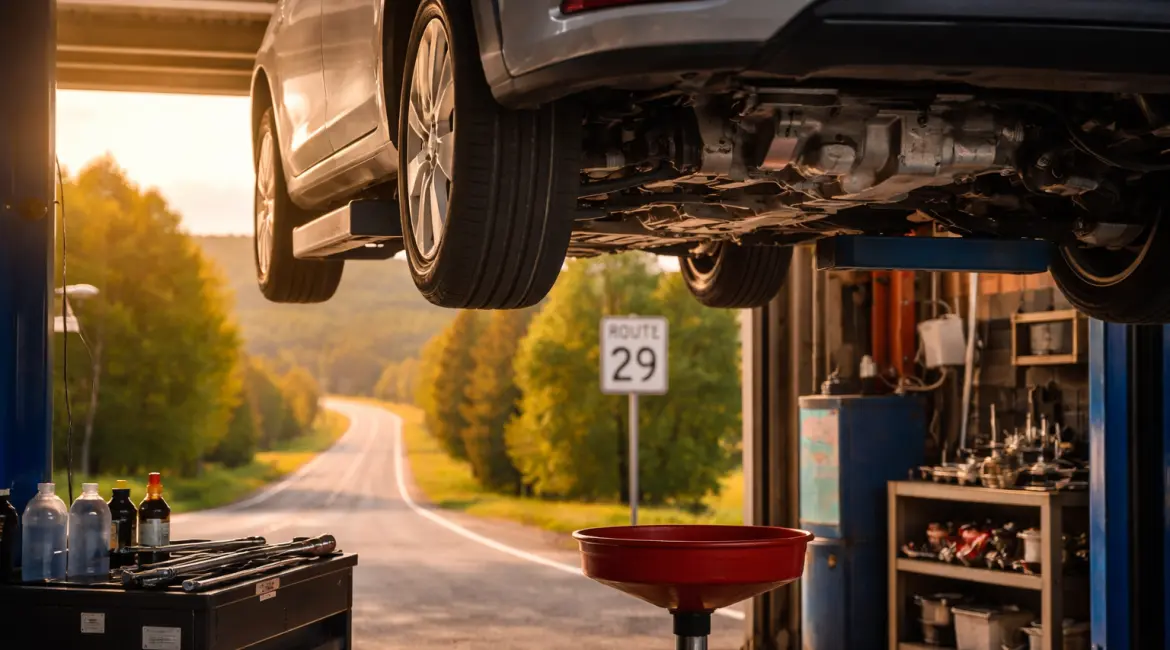
Chrome Auto Repair, located at 4998 S Amherst Hwy, Madison Heights, VA 24572, has proudly served Madison Heights drivers since 2020. Family-owned and led by Jeffrey Eddy, who brings over 25 years of hands-on experience, our ASE-certified team specializes in accurate transmission diagnostics and long-term repair solutions. Whether you are driving along Route 29 or navigating Amherst County back roads, transmission problems like slipping or hard shifting should never be ignored.
Recently, a Madison Heights commuter noticed her SUV hesitating while merging onto Route 29. The engine revved normally, but the vehicle did not accelerate right away. At first, she assumed it was just cold weather affecting performance. Over the next few days, the hesitation became more noticeable, especially during stop-and-go traffic. By the time the check engine light appeared, the transmission fluid had already darkened from excess heat.
Situations like this are common. What feels like a small delay can indicate internal pressure loss. Catching it early can mean the difference between a manageable repair and a full rebuild.
If you are searching for transmission repair in Madison Heights, VA, this guide explains what is happening inside your vehicle, what your repair options look like, and how to prevent minor issues from turning into major transmission failure.
Types of Transmission Problems Drivers Experience
Transmission problems do not all present the same way. Understanding the category of issue helps determine urgency and repair direction.
Common transmission concerns include:
- Slipping between gears
- Hard or delayed shifting
- Torque converter shudder
- Transmission overheating
- Grinding in manual transmissions
- CVT hesitation or surge
- Fluid leaks under the vehicle
Automatic, manual, and continuously variable transmissions each fail differently. Manual transmissions often show clutch wear symptoms such as grinding or difficulty engaging gears. CVTs may exhibit belt slip or overheating protection mode. Traditional automatics commonly show flare, delayed engagement, or harsh shift patterns.
Recognizing which category your symptoms fall into allows for more accurate diagnosis and faster repair decisions.
Transmission Repair in Madison Heights, VA: What Slipping Really Means
If your engine revs but your vehicle hesitates before moving, that condition is called transmission slipping.
Transmission slipping happens when internal clutch packs fail to fully engage, preventing proper power transfer from the engine to the drivetrain. In automatic transmissions, this often feels like delayed gear engagement or a flare between shifts.
Inside your transmission, hydraulic line pressure, often ranging between 60 and over 200 PSI depending on load, applies clutch packs, engages planetary gear sets, and locks the torque converter clutch.
When pressure leaks internally due to worn bushings, degraded seals, valve body bore wear, or even pump inefficiency, clutches cannot clamp properly. In more advanced cases, input shaft wear or internal band failure in certain transmission designs can also contribute to improper engagement. The result is slip instead of firm engagement.
It is important to note that not every hesitation is internal transmission failure. Low engine power, ignition misfires, restricted airflow, or even torque management programming can sometimes mimic transmission slipping. Proper diagnostics prevent replacing major components when the root cause is elsewhere.
In Madison Heights traffic, especially during stop-and-go driving near Route 29, repeated heat cycles accelerate wear. Vehicles that frequently transition between city traffic and rural back roads experience constant shift pattern changes that can stress adaptive systems over time.
Hard Shifting or Jerking Gears in Madison Heights Traffic: Early Warning Signs
A hard shift feels like a sudden bump when the transmission changes gears. Harsh engagement may indicate pressure control solenoid malfunction, adaptive learning limits, software calibration issues, or developing mechanical wear.
Common symptoms include:
- Delayed gear engagement when shifting into Drive
- Torque converter shudder between 35 and 50 mph
- Burning transmission fluid smell
- Check engine light with transmission-related codes
- Jerking during acceleration
- Transmission temperature warning light
- Vehicle entering limp mode
A frequent code is P0700, which signals a transmission fault stored in the transmission control module. Another is P0730, Incorrect Gear Ratio, triggered when the actual gear ratio does not match commanded values. This often indicates slipping clutch material.
Ignoring early symptoms allows friction material to overheat and contaminate the fluid. What begins as a solenoid, adaptation, or calibration issue can escalate into internal wear if not evaluated promptly.
What Causes Transmission Problems in Madison Heights Vehicles?
Excess heat is one of the primary contributors to automatic transmission failure. When fluid temperatures rise consistently above normal operating range, internal components wear more quickly than many drivers expect.
Most automatic transmissions are designed to last between 150,000 and 200,000 miles under normal conditions, according to industry service life expectations outlined by organizations such as the National Highway Traffic Safety Administration. Heavy towing, repeated overheating, and aggressive driving can shorten that lifespan significantly.
Automatic Transmission Fluid oxidizes as temperatures climb. Once fluid repeatedly exceeds about 220 degrees Fahrenheit, viscosity begins to change and friction modifiers lose effectiveness.
Internally, this can lead to:
- Degradation of clutch pack friction material
- Varnish buildup in valve body passages
- Sticking pressure control solenoids
- Bushing wear that causes internal pressure loss
- Metal debris circulating through the hydraulic system and transmission cooler lines
- Contamination trapped in cooler lines that can damage a replacement unit if not properly flushed
Vehicles driven through rolling terrain in Amherst County, commuting between Madison Heights and Lynchburg, or traveling through areas near Sweet Briar often operate at higher sustained temperatures than flat highway commuting would produce. Summer humidity and stop-and-go congestion on Route 29 further increase thermal load.
A common mistake drivers make is shifting between Drive and Reverse before the vehicle comes to a complete stop. That abrupt torque reversal places additional stress on clutch packs and planetary gears, especially in trucks and SUVs.
Many drivers hear the phrase lifetime fluid. In reality, fluid chemistry changes over time. The Car Care Council emphasizes that routine fluid inspections are critical to long-term drivetrain reliability. Service intervals should be based on usage conditions rather than marketing terminology.
Transmission Rebuild vs Replacement: What Is the Difference?
One of the most common questions drivers ask is whether they need a transmission rebuild or full replacement.
A rebuild typically involves disassembling the transmission, replacing worn friction components, seals, and gaskets, and inspecting hard parts such as gears and drums. If the core housing and major components remain intact, a rebuild may restore proper operation.
A replacement may be necessary when:
- Hard-part damage is extensive
- The case is cracked
- Internal metal contamination is severe
- Previous repairs failed
In some cases, installing a remanufactured transmission can be more cost-effective than rebuilding a severely damaged unit. The correct path depends entirely on inspection results and internal condition.
Accurate diagnostics determine whether repair, rebuild, or replacement is appropriate.
How Long Does Transmission Repair Take?
Repair timelines depend on the nature of the problem.
- Minor electrical or solenoid repairs may be completed within a day
- Valve body repairs can often be completed in one to two days
- Full rebuilds typically require several days depending on parts availability
- Complete replacement may extend slightly longer depending on sourcing
Most diagnostic evaluations can be completed the same day. Setting realistic expectations helps reduce stress during the repair process.
How Transmission Diagnostics Determine the Right Repair
Accurate transmission diagnostics prevent unnecessary rebuilds and reduce guesswork.
At our Madison Heights transmission shop near Route 29, diagnostics typically involve more than simply connecting a scan tool. A complete evaluation may include:
- Scan tool analysis and freeze-frame data review
- Live data monitoring under load
- Line pressure testing
- Bidirectional solenoid activation
- Fluid inspection for color, odor, and debris
- Road testing under adaptive learning conditions
For example, a P0741 code, Torque Converter Clutch Performance, may indicate lockup clutch slip rather than total transmission failure. Pressure control solenoid codes may point to electrical faults instead of mechanical damage.
Transmission repair is one component of our comprehensive major auto repair services in Madison Heights, which include advanced diagnostics, engine repair, and complete drivetrain solutions.
Early Symptoms vs Major Failure: What Happens If You Wait?
Early symptom:
- Slight slip during acceleration
- Occasional hard shift
Typical early repair:
- Fluid correction
- Solenoid replacement
- Software recalibration
If ignored:
- Clutch pack overheating
- Metal contamination
- Complete internal failure
Addressing symptoms early often keeps repairs manageable and prevents cascading internal damage.
How Madison Heights Driving Conditions Affect Your Transmission Repair Needs
Driving conditions in Amherst County directly influence transmission lifespan.
- Stop-and-go traffic on Route 29 increases heat cycles
- Short trips prevent full fluid warm-up and allow moisture buildup
- Local truck owners frequently tow, increasing torque load
- Rolling terrain adds sustained strain compared to flat driving
Drivers searching for transmission repair near me often notice symptoms during routine commuting before a warning light ever appears.
Each situation requires model-specific knowledge. Accurate evaluation determines whether a software adjustment, component repair, rebuild, or replacement is appropriate.
Case Study: Avoiding an Unnecessary Transmission Replacement
A Madison Heights Ram 1500 owner experienced harsh 2 to 3 shifts and feared a complete rebuild.
Diagnostics showed that adaptation values were maxed out due to a low fluid level rather than internal clutch failure. After correcting the fluid level, performing a relearn procedure, and verifying proper line pressure, the transmission returned to normal operation.
This situation highlights the importance of measured diagnostics. Not every symptom requires major replacement.
Expert Insight: Preventing Transmission Failure Before It Starts
In real-world driving conditions, transmission longevity often comes down to consistent maintenance and early attention to subtle symptoms.
Practical guidelines include:
- Changing transmission fluid at reasonable intervals based on usage
- Avoiding aggressive throttle input while the vehicle is cold
- Addressing even minor shudder or flare early
- Scanning transmission codes as soon as warning lights appear
If a transmission has never been serviced and has very high mileage, a full flush may not always be appropriate. In some cases, inspection and fluid analysis should guide the decision rather than automatically performing a complete exchange.
Early intervention keeps repairs predictable and often more affordable.
How Much Does Transmission Repair Cost in Madison Heights, VA?
Transmission repair costs vary depending on the severity of damage and the type of transmission.
Typical cost categories include:
- Fluid service or minor correction: lower-cost preventative or corrective maintenance
- Solenoid or electrical repair: moderate cost depending on accessibility
- Valve body repair or replacement: mid-range repair depending on parts pricing
- Full rebuild: higher cost due to labor and internal component replacement
- Complete replacement or remanufactured unit: varies widely based on vehicle type and parts availability
Cost depends on internal damage, vehicle design, and whether metal contamination has spread through the system. A proper inspection determines which category your vehicle falls into before any major decisions are made.
Transmission Problems at a Glance: Causes, Fixes, and Severity
| Symptom | Likely Cause | Typical Repair Approach | Risk If Ignored |
| Slipping during acceleration | Low line pressure, clutch wear, valve body issues | Fluid correction, solenoid repair, internal inspection | Clutch pack overheating and internal damage |
| Hard or delayed shifting | Solenoid fault, adaptive limits, software calibration | Diagnostic scan, relearn procedure, component repair | Increased internal wear and drivability issues |
| Burning fluid smell | Overheated transmission fluid | Fluid inspection, cooling system check | Rapid friction material breakdown |
| Limp mode activation | Sensor fault, severe slip, temperature spike | Immediate diagnostic evaluation | Potential complete transmission failure |
| Grinding in manual transmission | Clutch wear, synchronizer damage | Clutch replacement or internal repair | Gear damage and unsafe operation |
This comparison helps drivers understand how early symptoms differ from severe internal failure and why prompt diagnostics can prevent escalation.
Can You Drive With a Slipping or Hard Shifting Transmission?
In some cases, limited driving may be possible. In other situations, continued operation can cause rapid internal damage.
You should avoid driving the vehicle if you notice:
- A strong burning fluid smell
- Transmission temperature warning light
- Vehicle entering limp mode
- Grinding or severe slipping under light acceleration
You may be able to drive short distances cautiously if:
- Symptoms are mild and intermittent
- There is no burning odor
- No warning lights are illuminated
When in doubt, reducing load and avoiding highway driving can help limit additional damage until the vehicle is evaluated.
Manual vs Automatic vs CVT Transmission Problems
Different transmission designs fail in different ways.
Automatic transmissions typically show slipping, harsh shifts, delayed engagement, or torque converter shudder.
Manual transmissions more commonly exhibit clutch wear, grinding during gear engagement, or difficulty shifting.
Continuously variable transmissions may demonstrate belt slip, surge under acceleration, or overheating protection mode activation.
Identifying which type of transmission is in your vehicle helps narrow down the likely causes and appropriate repair path.
Transmission Repair FAQ: Madison Heights Drivers Ask These Questions
How much does transmission repair cost in Madison Heights, VA?
Repair costs depend on whether the issue is electrical, hydraulic, or mechanical. Minor solenoid or valve body repairs are typically far less involved than internal rebuilds. Complete replacement varies based on vehicle design and the extent of contamination. A proper inspection determines the correct category before costs are finalized.
Can I drive with a slipping transmission?
Driving with active slipping can overheat clutch packs and circulate metal debris through the hydraulic system, increasing the likelihood of more extensive damage.
How long should a transmission last?
Under typical driving conditions, many automatic transmissions reach 150,000 miles or more. Towing, repeated overheating, and neglected fluid service can reduce that lifespan.
When is a rebuild necessary?
Rebuilds are generally required when friction material contamination spreads throughout the system or when hard-part damage such as gears, drums, or shafts is present.
Schedule Transmission Repair in Madison Heights, VA
📞 Call us at 434 219 6443
📍 Address: 4998 S Amherst Hwy, Madison Heights, VA 24572
Chrome Auto Repair is ASE-certified, BBB-recognized, and family-owned, serving drivers throughout Madison Heights, Lynchburg, Sweet Briar, and the surrounding Amherst County area. Our team focuses on accurate diagnostics, honest recommendations, and long-term repair solutions that protect your vehicle.
Addressing transmission concerns early helps prevent larger repairs and keeps your vehicle reliable for everyday commuting and long-distance driving.
