If your car won’t start, the problem is usually not what you think.
At Chrome Auto Repair in Madison Heights, VA, conveniently located on S Amherst Hwy, we’ve been helping drivers in Madison Heights since 2020 diagnose no-start issues quickly and accurately. As a family-owned shop led by Jeffrey Eddy with over 25 years of experience, our ASE-certified technicians focus on diagnostics first, not guesswork.
If you’re dealing with a Car Won’t Start in Madison Heights, VA, here’s what’s likely happening, why it happens, and how to fix it correctly the first time.
Car Won’t Start Near Me in Madison Heights, VA – What to Expect
If you searched for “car won’t start near me” in Madison Heights, you’re likely dealing with an urgent situation. Most drivers in this position need fast answers and reliable diagnosis, not guesswork or unnecessary part replacement.
A professional inspection typically begins with confirming whether the issue is battery-related, starter-related, or caused by a deeper electrical or fuel system problem. In many cases, what seems like a simple battery failure turns out to be a more complex issue such as a parasitic draw, failing starter, or charging system fault.
Working with a local shop that understands common driving conditions in Madison Heights helps speed up the process. Short trips, seasonal temperature swings, and stop-and-go traffic patterns all influence how starting systems fail in this area.
Can a Bad Battery, Starter, or Alternator Cause a No-Start?
Yes, and each component fails in a different way.
A bad battery typically results in low available current, leading to slow cranking or clicking sounds. A failing starter may draw excessive current or fail to engage entirely, even when the battery is fully charged. An alternator problem often shows up over time, where the battery repeatedly loses charge because it is not being properly replenished while driving.
Understanding the difference between these failures is critical. While all three can cause a no-start condition, they require completely different repairs. Proper testing is the only way to identify which component is responsible.
Car Won’t Start in Madison Heights, VA – What This Problem Really Means
You turn the key or press the start button and nothing happens, or maybe you hear a click. Now you’re stuck, possibly late for work or stranded somewhere along Route 29.
Last month, a driver in Madison Heights stopped at a gas station just off Route 29 and came back out to a car that wouldn’t start. The lights came on, but all they heard was a single click. They assumed the battery was dead and tried a jump-start, but it didn’t help.
When the vehicle was inspected at Chrome Auto Repair in Madison Heights, VA, the issue turned out to be a failing starter motor drawing too much current. The battery was actually fine. This is more common than most people realize. What feels like a dead battery is often something deeper in the starting system.
A car won’t start when the battery, starter, fuel system, or ignition system fails to deliver enough power, fuel, or spark to begin engine operation. From a diagnostic standpoint, the key is understanding whether the engine is trying to turn over or not.
There are two main conditions technicians look for. A no crank condition means the engine is not turning at all, which usually points to electrical or starter system problems. A crank no start condition means the engine is turning but not firing, which typically involves fuel or ignition issues. Identifying which situation you have immediately narrows down the diagnostic path.
What to Do When Your Car Won’t Start in Madison Heights, VA (Step-by-Step Checks)
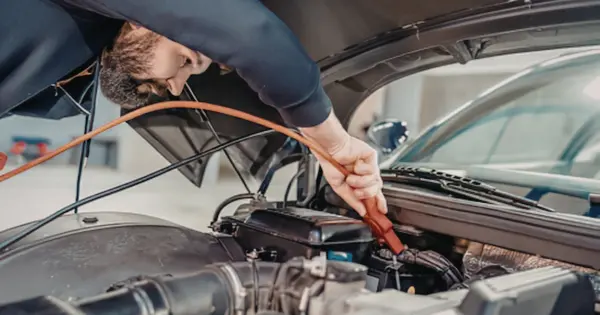
Before calling for help, there are a few practical checks that can give you valuable clues about what’s happening. If the vehicle seems completely dead, attempting a jump-start can quickly confirm whether the battery is the issue. However, if a jump-start does not change anything, the problem likely lies elsewhere in the starting system.
Take a moment to inspect the battery terminals. Corrosion or loose connections can prevent proper current flow even if the battery itself is still good. When you turn the key, pay close attention to what you hear. A single click often points toward the starter, while rapid clicking usually indicates low battery power. Also verify that the vehicle is fully in Park or Neutral, as safety switches can prevent the engine from cranking.
If these basic checks do not resolve the issue, professional testing becomes essential. Modern vehicles require proper diagnostic procedures to avoid unnecessary part replacement.
What Happens When Your Car Won’t Start (Electrical System Diagnosis Explained)
Starting your vehicle is not a single action but a coordinated electrical sequence. When you initiate the start process, the battery supplies voltage to the system. The ignition switch or push-button then sends a signal through the control circuit, activating the starter relay. This relay allows power to reach the starter solenoid, which engages the starter motor and physically turns the engine. At the same time, the vehicle’s computer manages fuel delivery and ignition timing to bring the engine to life.
From a diagnostic perspective, three electrical principles matter most. Voltage is what pushes electricity through the system, current is what actually performs the work, and resistance is what restricts flow. A battery may show a full 12.6 volts and still fail if it cannot supply enough current under load. This is why professional technicians rely on voltage drop testing rather than simple voltage readings.
Why a Bad Ground Can Mimic a Dead Battery
Ground connections are one of the most overlooked causes of starting problems. Your vehicle depends on solid electrical grounding between the battery, engine, chassis, and starter. If any of these connections become loose or corroded, the electrical circuit is disrupted.
When this happens, the symptoms can be misleading. You may experience slow cranking, intermittent starting issues, or a clicking noise that mimics a weak battery. In reality, the problem is not a lack of power but an inability for that power to return through the circuit properly.
At Chrome Auto Repair in Madison Heights, VA, we regularly diagnose vehicles where the root cause was a high-resistance ground connection rather than a failed component. Correcting the ground restores proper current flow and resolves the issue without unnecessary part replacement.
No Crank vs Crank No Start – Accurate No-Start Diagnosis in Madison Heights, VA
Two vehicles may both fail to start, but the underlying causes can be completely different depending on whether the engine is cranking.
No Crank Condition
In a no crank situation, the engine does not turn at all. This usually indicates a failure somewhere in the starting circuit. Common causes include a weak battery that cannot supply sufficient current, a worn starter motor, a faulty starter solenoid, or poor electrical connections such as corroded terminals or failing relays. Observing how the vehicle behaves provides important clues. If the lights remain bright but only a click is heard, the starter is often the issue. If the lights dim significantly, the battery or connections are more likely at fault.
Crank No Start Condition
When the engine cranks but does not start, the issue shifts away from the starter system and toward fuel or ignition. In these cases, the engine is physically turning, but it is not receiving the necessary fuel pressure or spark to run. Common failures include a malfunctioning fuel pump, ignition coil issues, or a failed crankshaft position sensor. Proper diagnosis requires verifying fuel pressure and checking for spark output.
Most Common Reasons a Car Won’t Start in Madison Heights, VA
Most no-start issues we diagnose at Chrome Auto Repair in Madison Heights fall into a handful of core categories. While a weak or failing battery is the most common cause, it is far from the only one. Starters frequently fail due to internal wear or heat-related issues, especially as vehicles accumulate mileage. Alternators can also contribute by failing to properly recharge the battery, leading to repeated starting problems.
In addition, we often see vehicles with hidden electrical drains that slowly discharge the battery overnight. Fuel delivery issues, while less common in no crank situations, become a primary factor in crank no start conditions. Understanding these patterns helps avoid unnecessary repairs and ensures the correct component is addressed the first time.
Battery, Starter, or Alternator Problems in Madison Heights, VA – How Proper Diagnosis Works
Replacing parts without proper testing is one of the fastest ways to increase repair costs. At Chrome Auto Repair in Madison Heights, VA, our technicians follow a structured diagnostic approach designed to identify the exact failure point.
We begin with battery load testing to confirm the battery’s ability to deliver current under demand. From there, voltage drop testing is used to evaluate the integrity of cables and connections. Starter amperage draw testing reveals whether the starter is operating within normal parameters or drawing excessive current. Finally, alternator output and ripple testing ensure the charging system is functioning correctly.
This process allows us to pinpoint the root cause rather than relying on guesswork. In many cases, what appears to be a battery problem is actually caused by a failing starter or alternator.
Electrical Drain Problems in Madison Heights, VA – Why Your Battery Keeps Dying Overnight
If your battery repeatedly dies overnight, a parasitic draw is likely present. After a vehicle is shut off, a small amount of electrical draw is normal as systems like the clock and security modules remain active. However, when this draw exceeds acceptable levels, the battery can discharge much faster than expected.
From a diagnostic standpoint, technicians measure this draw using an ammeter after the vehicle has gone into sleep mode. A properly functioning vehicle will typically settle below 50 milliamps. Anything above that indicates that a circuit is staying active when it should not.
Common causes include modules that fail to shut down, relays that remain stuck in the on position, wiring faults, or aftermarket accessories that continue drawing power. In many cases, these issues are intermittent, which makes them difficult to diagnose without proper testing procedures and time.
Short driving distances around Madison Heights can make this issue worse because the battery does not have enough time to fully recharge between trips. Over time, repeated partial charging cycles weaken the battery, making it more sensitive to even minor electrical drains.
Proper diagnosis involves isolating circuits one at a time until the excessive draw disappears. This is a methodical process, but it is the only way to accurately identify the root cause without replacing unnecessary components.
Why Modern Cars Won’t Start (Push Button Systems, Sensors, and Modules)
Modern vehicles rely heavily on electronic systems to control starting functions. Components such as keyless entry modules, brake interlock switches, immobilizer systems, and communication networks all play a role in allowing the engine to start.
Unlike older vehicles where a direct mechanical connection controlled starting, today’s systems depend on multiple modules communicating with each other. If even one of these modules fails to send or receive the correct signal, the vehicle may not crank at all.
For example, a faulty brake switch in a push-button start vehicle can prevent the system from recognizing that the brake pedal is applied, which is required for starting. Similarly, immobilizer system faults can block the engine from starting even if the battery and starter are functioning properly.
Diagnosing these issues requires advanced scan tools capable of reading module data and communication faults. Without this equipment, it is nearly impossible to determine whether the issue is mechanical or electronic.
Why Your Car Won’t Start in Madison Heights, VA (Driving Habits That Cause It)
Driving habits in Madison Heights can have a significant impact on starting system reliability. Frequent short trips, especially along Route 29 and nearby roads, reduce the amount of time the alternator has to recharge the battery. Over time, this leads to increased battery wear and a higher likelihood of starting issues.
Each time you start your vehicle, a large amount of current is drawn from the battery. If the vehicle is only driven for a short period afterward, the alternator may not have enough time to fully replenish that energy. Repeating this cycle daily gradually weakens the battery.
Seasonal temperature changes also play a role. Cold weather reduces battery efficiency and increases the amount of power required to start the engine. Heat, on the other hand, accelerates internal wear in batteries, starters, and alternators, often leading to failure without much warning.
Understanding how these factors affect your vehicle can help you take preventative steps, such as occasional longer drives or routine battery testing, to reduce the risk of being stranded.
Why Guessing a No-Start Problem Can Cost You More in Madison Heights, VA
One of the most common mistakes drivers make is replacing parts without confirming the actual cause of the problem. This often leads to unnecessary expenses and continued frustration when the issue is not resolved.
For example, a vehicle with a failing starter may still show signs similar to a weak battery. Replacing the battery might temporarily improve performance, but the underlying issue remains. The same applies to alternator problems, where a battery is repeatedly replaced without addressing the charging system.
We regularly see vehicles where multiple components were replaced unnecessarily before proper diagnostics were performed. This not only increases repair costs but can also introduce new issues if parts are installed incorrectly or unnecessarily.
With proper diagnostic procedures, most no-start issues can be identified quickly and accurately, often within an hour. Investing in testing upfront almost always results in lower overall repair costs.
When a No-Start Condition Becomes a Bigger Problem
A slow crank is often an early warning sign of a developing issue. While the vehicle may still start, the reduced cranking speed indicates that the battery, starter, or electrical connections are not operating at full capacity.
Ignoring this symptom can lead to more significant problems over time. A struggling starter may eventually fail completely, leaving the vehicle unable to start at all. A weak battery can become permanently damaged if it is repeatedly discharged and recharged under poor conditions.
Additionally, increased electrical resistance in cables or connections can place extra strain on the entire starting system. This can accelerate wear on multiple components rather than just one.
Addressing the issue early not only prevents breakdowns but also reduces overall repair costs by avoiding secondary damage and more extensive repairs.
How Much Does It Cost to Fix a Car That Won’t Start in Madison Heights, VA?
Repair costs can vary depending on the root cause of the problem. Battery replacement is typically the most affordable option, while starter and alternator repairs involve more labor and higher component costs.
A standard battery replacement generally ranges from $150 to $300 depending on the vehicle and battery type. Starter replacement can range from $300 to $800 due to labor time and accessibility. Alternator repairs typically fall between $400 and $900, especially on vehicles where the alternator is mounted in a difficult location.
It is important to understand that these are general ranges. The actual cost depends on the specific vehicle, the parts required, and the complexity of the repair. What matters most is accurate diagnosis. Replacing the wrong component can quickly double or triple the total cost.
Professional testing ensures that only the necessary repairs are performed, which ultimately saves money and prevents repeat visits.
Case Study – How a Madison Heights Driver Avoided Replacing the Wrong Part
A local driver replaced their battery twice, but the problem persisted. When the vehicle was brought into Chrome Auto Repair in Madison Heights, VA, diagnostic testing revealed a faulty relay causing a parasitic draw.
Once the relay was replaced, the issue was resolved permanently. This case highlights the importance of proper testing rather than relying on assumptions.
Expert Tip from Chrome Auto Repair – Prevent Getting Stranded
Preventative maintenance is the most effective way to avoid unexpected starting problems. Regular battery testing helps identify weakening components before they fail completely. Keeping terminals clean ensures proper electrical flow, while paying attention to slow cranking can provide early warning of developing issues.
Limiting excessive short trips and turning off unnecessary accessories can also help extend the life of your battery and starting system.
Car Won’t Start FAQ – Madison Heights, VA Drivers Ask These Questions
Why won’t my car start but the lights work?
The battery may have enough voltage to power lights, but not enough current to operate the starter motor. This is a common situation where the battery appears functional but fails under load.
Why does my car click but won’t start?
This usually indicates a weak battery, poor connection, or a failing starter solenoid. A single click often means the solenoid is engaging but the starter motor is not turning.
Can a bad alternator cause a no-start?
Yes. If the alternator is not charging the battery properly, the battery will gradually lose its ability to start the vehicle, especially after repeated short trips.
How long does diagnosis take?
Most no-start issues can be diagnosed within an hour using proper testing procedures. More complex electrical issues may take longer depending on the symptoms.
Schedule Car Won’t Start Repair in Madison Heights, VA Today
If your car won’t start in Madison Heights, don’t guess. Get it diagnosed correctly.
Chrome Auto Repair
4998 S Amherst Hwy, Madison Heights, VA 24572
(434) 219-6443
Trusted by drivers in Madison Heights since 2020, Chrome Auto Repair provides ASE-certified diagnostics, recognized service standards, and a strong nationwide warranty.
Enjoy free coffee or use the Uber shuttle while your vehicle is inspected. Call today, get directions, or stop by for fast, accurate no-start diagnostics and get back on the road with confidence.