
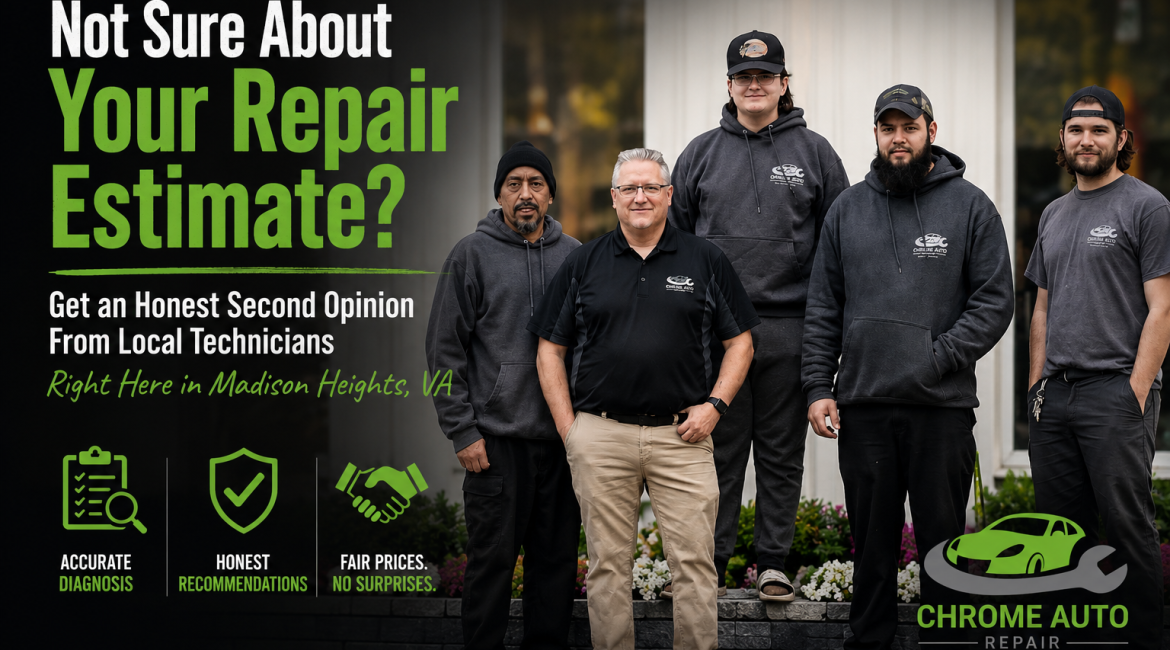
Why Madison Heights Drivers Are More Careful About Auto Repair Estimates Than Ever
Most people don’t walk into an auto repair shop feeling confident.
They walk in worried.
Worried the repair will cost more than expected. Worried they’re being told they need repairs they don’t actually need. Worried they won’t understand what the mechanic is explaining. And honestly, many drivers around Madison Heights and Lynchburg have had at least one repair experience that made them feel rushed, pressured, or confused.
That’s especially true right now.
Vehicle ownership costs continue climbing. Parts prices have increased. Modern vehicles are more technologically complicated than they were even ten years ago. And for many Central Virginia families, replacing a vehicle simply isn’t realistic. Drivers are keeping cars longer, pushing older vehicles through longer commutes, and trying to make smart repair decisions without wasting money.
That creates a major trust issue in the automotive industry.
A customer hears:
“You need brakes, suspension work, tires, and steering components.”
But what does that actually mean?
Are the brakes unsafe?
Are the suspension bushings torn completely?
Is the wheel alignment causing tire wear?
Are the repairs urgent or preventative?
Can anything wait?
Most people simply want someone to explain things honestly.
That’s where a truly transparent repair shop stands out.
At Chrome Auto Repair in Madison Heights, VA, the focus is not on pushing repairs. It’s on helping customers understand their vehicles well enough to make confident decisions. Chrome Auto Repair is a family-owned shop established in 2020, backed by over 25 years of industry experience and ASE-certified expertise. The shop serves drivers throughout Madison Heights, Lynchburg, Sweet Briar, Amherst County, and surrounding Central Virginia communities.
That local experience matters because vehicles in this region deal with unique wear conditions every day.
Drivers commuting Route 29 into Lynchburg often sit in stop-and-go traffic that accelerates brake wear and transmission stress. Rural roads throughout Amherst County can be rough on steering and suspension problems, wheel bearings, and tire alignment. Seasonal Virginia weather affects battery health, fluid condition monitoring, and tire pressure fluctuations.
Over time, those conditions create real repair needs.
But honest mechanics understand something important:
Not every repair recommendation is equally urgent.
A trustworthy repair estimate should help customers prioritize repairs based on:
- safety
- reliability
- budget
- vehicle longevity
- preventative maintenance needs
That’s why Chrome Auto Repair emphasizes:
- transparent communication
- digital vehicle inspections
- repair authorization before work begins
- technician explanations customers can actually understand
- honest diagnostics instead of pressure tactics
Customers also appreciate practical conveniences that make stressful repair situations easier:
- Free coffee while waiting
- Free shuttle/Uber options
- O’Reilly-backed 3-year/36,000-mile warranty coverage
- ASE-certified technicians
- Reputation-focused customer service
The truth is, most customers don’t expect perfection from a repair shop. They expect honesty.
And if a repair estimate feels confusing, rushed, or overly aggressive, getting a second opinion is completely reasonable.
Quick Takeaways for Madison Heights Drivers
Before approving major auto repairs, drivers should:
- Ask what testing confirmed the problem
- Request measurements or inspection findings
- Understand which repairs are urgent versus preventative
- Get a second opinion if the estimate feels rushed or unclear
- Choose a shop focused on diagnostics instead of guessing
Honest Shop vs. Untrustworthy Shop
| Honest Repair Shop | Untrustworthy Repair Shop |
| Explains diagnostic findings clearly | Uses vague explanations |
| Prioritizes safety-related repairs first | Pushes every repair immediately |
| Shows measurements and failed parts | Avoids showing evidence |
| Uses proper testing procedures | Replaces parts based on guesses |
| Communicates throughout the process | Creates pressure and urgency |
| Stands behind repairs with warranty coverage | Avoids accountability after repairs |
5 Red Flags That an Auto Repair Estimate May Not Be Honest
Not every expensive estimate is dishonest.
Modern vehicles can absolutely require costly repairs. Electrical diagnostics, transmission repairs, steering system failures, advanced drivability concerns, suspension wear, and brake repair can involve significant labor and specialized testing.
But there’s a big difference between:
- an expensive repair that’s legitimate
and - an estimate built around pressure and uncertainty
Experienced technicians and informed consumers usually recognize the warning signs pretty quickly.
1. The Estimate Uses Vague Language Instead of Clear Explanations
One of the biggest red flags is when repair recommendations stay intentionally unclear.
If a customer receives an estimate saying:
- “Front end repairs needed”
- “Vehicle unsafe”
- “Needs major suspension work”
…without any detailed explanation, measurements, or inspection findings, that’s a problem.
An honest mechanic should explain:
- which components failed
- what symptoms were verified
- what testing was performed
- whether repairs are urgent or preventative
For example, suspension issues should identify whether:
- ball joints have excessive play
- suspension bushings are torn
- steering components are loose
- wheel alignment angles are outside specification
- tire wear indicators show abnormal wear patterns
Good shops document problems because transparency builds trust.
Quick Tip for Drivers
If a repair shop cannot clearly explain what failed or why the repair is needed, it’s reasonable to slow down and ask additional questions before approving work.
2. There’s No Actual Diagnostic Explanation
This happens constantly in the industry.
A customer may come in with issues like a check engine light, intermittent stalling, repeated dead batteries, vibration while braking, or rough shifting.
…and instead of testing, parts simply start getting replaced.
That approach creates unnecessary repair costs fast.
Proper diagnostics involve process and logic.
An experienced ASE-certified mechanic may use:
- scan tool diagnostics
- live sensor data analysis
- diagnostic trouble code (DTC) interpretation
- electrical system testing
- battery load testing
- alternator output testing
- parasitic battery drain testing
- technician road testing
- OEM repair procedures
Without those steps, many repairs become educated guesses.
Good diagnostics sometimes take longer than customers expect, especially when problems occur intermittently or only under certain driving conditions. While that can feel frustrating upfront, thorough testing often prevents far more expensive repeat repairs later.
That’s how customers end up replacing:
- batteries that weren’t bad
- alternators that weren’t failing
- sensors that weren’t causing the issue
The difference between guessing and diagnosing is enormous.
Why This Matters
Many expensive repair bills happen because vehicles are diagnosed incorrectly the first time. Accurate testing often prevents unnecessary parts replacement and repeat visits.
3. You’re Pressured to Approve Repairs Immediately
Pressure creates anxiety.
And unfortunately, some repair shops rely heavily on urgency because customers often approve repairs faster when they feel nervous.
Now, some repairs truly are safety concerns.
For example:
- severely worn brake pads
- unsafe tire cords showing
- failing ball joints
- leaking brake hydraulics
- loose steering components
Those situations deserve immediate attention.
But honest shops still explain why the repair matters instead of simply saying:
“You need this right now.”
At Chrome Auto Repair, repair authorization and customer communication are part of the process because informed customers make better decisions.
Need a Second Opinion?
Drivers who feel uncertain about a repair recommendation should never feel pressured into immediate approval. A professional second opinion can help clarify whether repairs are urgent, preventative, or potentially unnecessary.
4. The Shop Refuses to Show You Failed Parts
A transparent mechanic usually has no issue showing customers:
- worn brake pads
- cracked suspension bushings
- leaking shocks
- damaged serpentine belts
- fluid leaks
- damaged tires
- failed steering components
In fact, digital vehicle inspections have become one of the best ways to build customer trust because visual evidence removes uncertainty.
For example:
- brake pad measurements can confirm remaining material thickness
- brake rotor thickness measurements determine whether resurfacing is safe
- tire wear indicators may reveal wheel alignment issues or suspension problems
- battery health testing can expose charging system failures
Visual proof matters because it transforms repairs from “sales recommendations” into understandable problems.
What Customers Should Expect
A transparent repair shop should be comfortable showing photos, measurements, testing results, or worn components whenever possible. Clear evidence helps customers make informed decisions with confidence.
5. The Estimate Includes Everything Possible
Some shops overwhelm customers intentionally.
A vehicle comes in for a simple inspection or oil change and suddenly the estimate includes:
- brakes
- suspension
- tires
- fluids
- steering components
- battery replacement
- alignment
- filters
- transmission services
Now, sometimes older vehicles genuinely do need multiple repairs.
But honest repair shops prioritize.
A trustworthy mechanic explains:
- what affects safety immediately
- what should be monitored
- what can wait
- what may become preventative maintenance later
That communication matters, especially for families trying to maintain older vehicles responsibly.
Smart Repair Prioritization Often Looks Like This
| Repair Type | Typical Priority |
| Brake safety issues | Immediate |
| Steering or suspension instability | Immediate |
| Tire wear monitoring | Near future |
| Fluid maintenance services | Preventative |
| Minor seepage or cosmetic issues | Monitor over time |
A trustworthy mechanic helps customers understand where repairs fall within those categories instead of treating every recommendation like an emergency.
Many Madison Heights drivers visit Chrome Auto Repair specifically for clearer explanations and honest second opinions before approving large repair bills elsewhere.
Why Accurate Diagnostics Save Madison Heights Drivers More Money Than Cheap Repairs
One of the biggest misconceptions in auto repair is that parts fix problems.
They don’t.
Accurate diagnosis fixes problems.
That distinction matters because replacing parts without confirming the root cause is one of the fastest ways customers waste money.
Experienced diagnostic technicians understand this because modern vehicles involve interconnected systems. A single symptom can have multiple causes, and multiple symptoms can originate from one underlying issue.
The “Throw Parts At It” Problem
This is incredibly common in today’s repair industry.
A customer may complain about battery drain, rough idle, warning lights, intermittent stalling, or poor acceleration.
Instead of testing properly, parts start getting replaced based on probability instead of confirmation.
Sometimes shops start replacing batteries, alternators, ignition coils, fuel pumps, sensors, or throttle bodies without fully confirming the root cause.
Eventually the problem either disappears accidentally or continues unresolved.
Neither outcome builds customer trust.
Experienced diagnostic technicians often see vehicles arrive after multiple repair attempts elsewhere. In many cases, the original symptom changed slightly after each repair, making the root issue even harder to identify later.
Real Madison Heights Scenario: The Vehicle That Kept Killing Batteries
This is a situation experienced shops see all the time.
A commuter traveling daily between Madison Heights and Lynchburg repeatedly replaces batteries every year.
At first glance, the battery tests weak.
So another battery gets installed.
Months later:
- slow cranking returns
- electrical systems act erratically
- the vehicle dies again
The actual issue may involve:
- weak alternator charging output
- excessive parasitic battery drain
- poor ground connections
- failing electrical modules
- damaged charging cables
Without proper charging system diagnostics and electrical testing, customers spend hundreds replacing perfectly good batteries while the real issue continues damaging the vehicle.
That’s why experienced mechanics rely on:
- battery load testing
- voltage drop testing
- amperage draw testing
- scan tool diagnostics
- live data monitoring
The difference between guessing and diagnosing is enormous. Shops that focus on accurate vehicle diagnostics are far more likely to identify root causes correctly instead of replacing unnecessary parts.
- voltage drop testing
- amperage draw testing
- scan tool diagnostics
- live data monitoring
The diagnosis matters more than the part.
Most experienced mechanics will tell you the same thing: replacing parts is easy. Finding the actual cause is the hard part.
A situation shops around Madison Heights see fairly often involves vehicles that have already had multiple parts replaced somewhere else before finally receiving a proper diagnosis.
For example, a customer might come in after replacing a battery, alternator, and starter over several months because the vehicle kept randomly failing to start. The symptoms seemed electrical, but previous repairs never fully solved the issue.
After proper testing, the actual cause may turn out to be something much simpler, like a damaged ground connection or intermittent wiring issue creating voltage drop problems under load. Situations like that are frustrating for drivers because the money spent on previous repairs often could have been avoided with a more complete diagnostic process upfront.
Seasonal weather changes around Madison Heights can also make intermittent vehicle problems harder to diagnose. Battery performance often drops during colder mornings, while summer heat can expose weak charging systems, cooling problems, and aging electrical components that may not fail consistently year-round.
Why Experienced Diagnostics Matter More Than Ever
Modern vehicles are extremely system-dependent, which is why many shops now rely heavily on modern vehicle diagnostics to identify issues accurately before repairs begin.
A 2015–2020 Ford F-150 may develop complex drivability concerns tied to sensor communication issues.
A 2012–2018 Honda Accord may display intermittent charging faults.
A Chevrolet Equinox may experience electrical module communication failures.
A Subaru Outback may develop wheel speed sensor issues affecting stability systems.
Reading a code alone does not diagnose the problem.
That’s one of the biggest misunderstandings customers encounter.
For example:
A code indicating an oxygen sensor issue does not automatically mean the sensor failed. Vacuum leaks, fuel delivery issues, exhaust leaks, or wiring problems may trigger similar DTCs.
Good diagnostics involve logic, verification, and experience.
At Chrome Auto Repair, technicians use:
- digital diagnostics
- technician road testing
- OEM repair information
- repair verification procedures
- electrical testing workflows
- visual inspection processes
That process may take longer upfront, but it often saves customers significant money long-term by preventing repeat failures.
Accurate Diagnostics Usually Save Money By:
- preventing unnecessary parts replacement
- reducing repeat repair visits
- identifying root causes earlier
- protecting related vehicle systems
- improving long-term reliability
An accurate diagnosis the first time can prevent weeks of frustration, unnecessary downtime, and repeated repair bills.
Why the Cheapest Repair Estimate Often Becomes the Most Expensive
Everybody wants to save money on repairs.
But there’s a difference between:
- saving money wisely
and - buying the cheapest temporary solution available
In auto repair, the lowest estimate frequently becomes the most expensive over time.
Especially in Central Virginia.
Vehicles around Madison Heights and Amherst County deal with rough rural road conditions, stop-and-go Route 29 traffic, long commuter mileage, seasonal weather changes, suspension stress, and accelerated brake wear.
Cheap repairs often fail much faster under those conditions.
Inferior Parts Create Repeat Failures
Not all replacement parts are equal.
Low-cost brake components may wear rapidly, squeal excessively, crack under heat, reduce braking performance, and even damage rotors prematurely.
Cheap suspension components may loosen quickly, affect wheel alignment, accelerate tire wear, and create repeat steering noise.
Poor-quality alternators can:
- damage battery health
- create charging inconsistencies
- trigger electrical system problems
Experienced technicians have seen many “cheap repairs” come back months later with worse damage than the original issue.
One thing many drivers don’t realize is that low-quality replacement parts sometimes fail fast enough to erase the original savings completely. In some cases, customers end up paying labor twice because the original repair didn’t last long enough under normal driving conditions.
Skipping Procedures Creates Bigger Problems
Some repair shops lower estimates by cutting labor time.
That usually means procedures get skipped.
Examples include failing to torque suspension hardware correctly, skipping steering angle resets, ignoring OEM repair procedures, failing to road test vehicles, neglecting post-repair verification, and skipping alignment checks after steering repairs.
Those shortcuts often create uneven tire wear, drivability concerns, repeat suspension failures, steering instability, and frustrated customers.
Most customers don’t mind paying for repairs once. What frustrates people is paying again a few months later because the original problem was never really solved.
A quality repair should restore reliability instead of temporarily masking symptoms.
Why Procedure Matters
Modern vehicles often require calibration procedures, electronic resets, alignment verification, and post-repair testing. Skipping those steps can create additional drivability or safety concerns later.
Long-Term Reliability Matters More Than Invoice Price
One thing experienced mechanics understand:
Customers rarely complain about paying for repairs that actually solve the problem.
What frustrates people is paying repeatedly for the same unresolved issue.
That’s why Chrome Auto Repair emphasizes:
- quality parts
- accurate diagnostics
- repair verification
- warranty-backed workmanship
- long-term reliability
The shop’s O’Reilly-backed 3-year/36,000-mile warranty helps reinforce confidence because customers deserve repairs built to last.
When Should Madison Heights Drivers Get a Second Opinion on a Repair Estimate?
More often than people think.
And honestly, good mechanics usually understand that.
A second opinion doesn’t mean a customer is difficult or distrustful. Usually, it simply means they want confidence before making a major financial decision.
That’s reasonable.
Especially today, when many Madison Heights families are trying to maintain older vehicles for as long as possible.
Situations Where a Second Opinion Makes Sense
Large Unexpected Repair Bills
If an estimate suddenly includes:
- transmission replacement
- major engine work
- extensive suspension repairs
- steering system replacement
- electrical system repairs
…it’s smart to ask questions.
Not because every estimate is wrong, but because major repairs deserve clarity.
Repairs Don’t Match the Symptoms
Sometimes customers describe vibration, unusual noises, battery drain, poor acceleration, or situations where a vehicle pulls to one side while driving.
…but the estimate doesn’t seem connected to the symptoms.
That mismatch can indicate incomplete diagnostics.
For example:
A suspension noise may actually involve loose sway bar links instead of needing tires.
A repeated dead battery may involve parasitic drain instead of battery failure.
Symptoms matter.
Not every fluid seep, suspension noise, or minor vibration automatically means a vehicle is unsafe to drive immediately. Experienced technicians often help customers prioritize repairs based on safety risk, drivability concerns, and how quickly the condition is likely to worsen. That kind of judgment matters, especially for families balancing repair costs with everyday transportation needs.
The Shop Won’t Explain Anything Clearly
This is a huge trust issue.
A trustworthy mechanic should explain:
- what failed
- why it failed
- how they confirmed it
- whether repairs are urgent
- what alternatives exist
Customers should never feel intimidated asking questions.
Myth vs. Reality
Myth:
“A mechanic gets offended if you ask questions.”
Reality:
Good mechanics appreciate informed customers because communication prevents misunderstandings and builds trust.
At Chrome Auto Repair, second opinions are welcomed because transparency matters more than pressure sales.
Customers deserve confidence before approving repairs.
Questions Customers Should Feel Comfortable Asking
- What testing confirmed the problem?
- Is the repair urgent or preventative?
- Can you show me the failed component?
- What happens if I wait?
- Are there multiple repair options available?
Real Repair Situations We Commonly See in Madison Heights
Hands-on experience matters because real-world repair patterns repeat over time.
And in Central Virginia, certain problems show up constantly because of local driving conditions, commuter mileage, and vehicle age.
Scenario 1: Full Brake Replacement Wasn’t Actually Necessary
A customer arrived after being told their vehicle needed:
- front brakes
- rear brakes
- rotors
- calipers
- brake fluid service
After inspection:
- rear brake pads still had substantial material remaining
- rotor thickness measurements remained within specification
- calipers operated normally
- only front brake service was necessary
That honesty saved the customer hundreds of dollars immediately.
Brake inspections should involve actual measurements — not assumptions.
Scenario 2: Tire Wear Was Really a Suspension Problem
This happens constantly on vehicles driven heavily through rural Amherst County roads.
A customer may notice uneven tire wear, steering instability, vibration, or wandering while driving.
Some shops immediately recommend tires.
But experienced suspension technicians understand the underlying issue may involve worn ball joints, damaged suspension bushings, failing tie rods, wheel alignment problems, or worn steering components.
Without correcting the root suspension issue, new tires wear out prematurely.
That’s why proper inspections matter.
Scenario 3: Repeated Battery Failures Were Actually Charging System Issues
A customer repeatedly replaced batteries in a commuter vehicle used heavily between Madison Heights and Lynchburg.
The actual issue involved weak alternator output under load, intermittent charging voltage drop, and excessive electrical draw overnight.
Without electrical system testing, the battery became the “blame part” repeatedly.
That’s where experienced diagnostics make a huge difference.
What Makes Chrome Auto Repair Different From Other Shops in Madison Heights
A lot of repair shops focus heavily on volume.
Move vehicles quickly.
Sell aggressively.
Get cars in and out.
Chrome Auto Repair approaches things differently.
The focus is long-term trust.
That may sound simple, but it changes how the entire repair experience feels for customers.
Relationship-Based Service Instead of Transaction-Based Repairs
Locally owned shops survive on reputation.
That means:
- customers return
- families refer relatives
- reviews matter
- communication matters
- trust matters
Chrome Auto Repair serves drivers throughout Madison Heights, Lynchburg, Sweet Briar, and surrounding communities by prioritizing honest communication over rushed sales tactics.
Experienced ASE-Certified Technicians
Modern diagnostics require more than basic repair knowledge.
Today’s vehicles involve advanced electronics, network communication systems, sophisticated charging systems, complex drivability controls, and integrated steering and suspension technology.
Chrome Auto Repair’s ASE-certified technicians bring more than 25 years of industry experience diagnosing:
- check engine light issues
- drivability concerns
- steering instability
- fluid leaks
- suspension wear
- electrical system problems
- charging system failures
That depth of experience matters because accurate diagnosis protects customers from unnecessary repairs.
Transparent Communication Throughout the Process
Customers should never feel left in the dark.
That’s why Chrome Auto Repair emphasizes:
- digital inspections
- repair authorization
- technician explanations
- realistic timelines
- honest repair prioritization
Sometimes repairs are urgent.
Sometimes they can wait.
Honest communication helps customers plan responsibly instead of feeling pressured.
Convenience and Customer Comfort Matter Too
Vehicle repairs are stressful enough already.
Chrome Auto Repair also offers:
- Free coffee
- Shuttle/Uber options
- Convenient Route 29 location
- Friendly local service
- Warranty-backed repairs
Those details help make difficult repair situations more manageable for busy commuters and families.
Many repair shops focus on speed and volume.
Chrome Auto Repair focuses on building long-term trust with local drivers.
Why Transparency Matters More Than Ever in Modern Auto Repair
Today’s vehicles are more complex than many drivers realize.
Modern cars and trucks rely on:
- electronic control modules
- advanced sensor systems
- network communication systems
- integrated steering and braking controls
- computerized drivability monitoring
That complexity makes accurate diagnostics and honest communication more important than ever.
Drivers shouldn’t feel like they need to become mechanics just to approve repairs confidently. A trustworthy repair shop explains issues clearly, documents findings, and helps customers understand what matters most for safety and reliability.
That kind of transparency is what helps long-term customer relationships grow.
Frequently Asked Questions About Auto Repair Estimates in Madison Heights, VA
How do I know if an auto repair estimate is fair?
A fair estimate should clearly explain:
- what failed
- why it failed
- how the issue was confirmed
- what repairs are urgent
- what repairs are preventative
Trustworthy shops provide transparency, measurements, inspection findings, and repair authorization before work begins.
Should a mechanic explain diagnostic charges?
Usually, yes. Most diagnostic charges cover technician time spent testing, troubleshooting, road testing, and verifying the actual cause of the problem instead of simply replacing parts. A professional repair shop should also explain what testing was performed and what findings led to the repair recommendation.
Why do repair estimates sometimes change?
Some failures aren’t visible until components are disassembled.
For example:
- brake hardware damage
- seized calipers
- hidden fluid leaks
- worn suspension mounting points
A reputable shop communicates additional findings clearly before proceeding with extra repairs.
Are cheaper repair shops really cheaper long-term?
Not always.
Lower-cost repairs sometimes involve:
- inferior parts
- skipped procedures
- reduced testing
- weak warranties
Those shortcuts can lead to repeat failures and higher long-term ownership costs.
When should I get a second opinion on auto repairs?
Consider a second opinion if:
- the estimate feels rushed
- the repairs aren’t clearly explained
- the diagnosis doesn’t match symptoms
- costs seem unusually high
- pressure tactics are being used
A trustworthy mechanic should welcome informed customers.
Why should I choose an ASE-certified mechanic?
ASE certification demonstrates verified technical knowledge and ongoing training in modern diagnostics, repair procedures, and automotive systems.
Modern vehicles require advanced troubleshooting skills, system knowledge, and testing experience. Reading a code is only one small part of diagnosing many modern drivability or electrical problems.
What kind of warranty should a repair shop offer?
A reputable repair shop should stand behind its work with meaningful warranty coverage that includes both parts and labor.
Warranty-backed repairs help provide confidence that the repair was performed properly using quality components.
Need an Honest Auto Repair Estimate in Madison Heights, VA?
If your repair estimate doesn’t feel clear, fair, or fully explained, the team at Chrome Auto Repair is here to help.
Whether you need:
- diagnostics
- brake repair
- suspension work
- steering repairs
- electrical troubleshooting
- Virginia state inspections
- transmission service
- or simply a trustworthy second opinion
…the goal is always the same:
honest recommendations and quality repairs customers can rely on.
Chrome Auto Repair
4998 S Amherst Hwy, Madison Heights, VA 24572
📞 Phone: (434) 219-6443
📘 Follow Chrome Auto Repair on Facebook
As a family-owned shop serving Madison Heights, Lynchburg, Sweet Briar, and surrounding Central Virginia communities, Chrome Auto Repair believes customers deserve transparency, accurate diagnostics, and repairs backed by real experience. The shop’s ASE-certified technicians, customer-first communication style, and reputation-focused approach continue helping local drivers make confident repair decisions every day.
If you’ve been searching for:
- an honest mechanic in Madison Heights VA
- transparent auto repair in Madison Heights
- a trusted ASE-certified mechanic
- reliable repair estimates
- or a second opinion before approving expensive repairs
…the team at Chrome Auto Repair is ready to answer questions, explain findings clearly, and help you make informed decisions without pressure.