What That Burning Smell Could Be Telling You About Your Vehicle
A strange odor from your vehicle can be unsettling, especially when it appears during a Route 29 commute or after you park in Madison Heights. It is easy to assume the worst, but a burning smell does not automatically mean the engine is failing. It does mean that something has changed, and the timing, location, and type of odor deserve attention.
Some smells come from fluid reaching a hot surface. Others develop when a brake drags, a belt slips, wiring overheats, or road debris touches the exhaust. A temporary post-service odor may fade normally, while smoke, brake fade, electrical burning, or a rising temperature gauge can make continued driving unsafe.
At Chrome Auto Repair, the first step is understanding what the driver noticed. The family-owned Madison Heights shop uses inspection findings, temperature measurements, electrical testing, and road testing when appropriate before recommending a repair.
If you cannot describe the smell perfectly, do not worry. “Sharp,” “sweet,” “like hot rubber,” or “strongest near the left front wheel” can be enough to start a useful diagnostic conversation.
What Your Nose Can Tell You Before the Dashboard Does
Odor can appear before a warning light because many mechanical problems begin outside the systems monitored by the vehicle’s computers. A valve cover gasket can seep oil onto a hot exhaust manifold without changing engine performance. A brake caliper can begin dragging while hydraulic pressure and pedal feel still seem normal. A loose electrical connection may create localized heat before a fuse opens or a control module records a fault.
Smells also change with temperature. A leak may remain odorless during a short trip, then become obvious once the engine is hot. After shutdown, heat soak can make it strongest because underhood airflow stops while components remain hot.
That makes three details especially useful:
- When it occurs: cold start, idle, acceleration, braking, hill climbing, highway driving, or after parking
- Where it is strongest: under the hood, near one wheel, beneath the center of the vehicle, at the tailpipe, or inside the cabin
- What accompanies it: smoke, warning lights, pulling, brake-pedal changes, weak acceleration, unusual noises, or a rising temperature gauge
Smell alone cannot confirm a repair. It narrows the search.
How Mechanics Use Smell, Timing, and Location to Narrow Down the Problem
Two drivers can use the same phrase, “burning smell,” while describing completely different problems. One may smell hot brakes only after a long downhill grade on an Amherst County road. Another may notice burning oil after parking a higher-mileage Honda Accord. A third may smell hot plastic through the vents when the blower motor is running.
The operating condition helps separate the possibilities:
| When or Where the Odor Appears | Possible Areas to Inspect |
|---|---|
| After the engine warms up | Oil leak, coolant leak, belt, exhaust debris |
| During or after braking | Brake pads, caliper, parking brake, flexible hose |
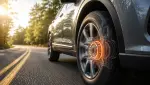
| Near one wheel | Dragging brake, wheel bearing, road debris |
| With the blower or A/C operating | Blower motor, resistor, wiring, HVAC housing |
| During acceleration or hill starts | Serpentine belt, clutch, exhaust, drivetrain |
| Near the battery | Battery, terminals, alternator, charging system |
| At the tailpipe | Rich fuel mixture, catalytic converter, engine performance |
| After parking | Heat soak revealing oil, coolant, wiring, or exhaust odors |
The location is just as important as the odor category. A sulfur smell from the tailpipe points the diagnostic process toward combustion and exhaust concerns. The same smell strongest near the battery may indicate an overcharged or failing battery. A technician should not condemn a catalytic converter based on odor alone.
In practice, where and when an odor appears is usually more useful than whether one person calls it rubber, plastic, oil, or hot metal. Technicians combine that context with visual evidence, temperature readings, scan data, electrical measurements, and a road test when it can be performed safely.
When Does the Burning Smell Happen?
The timing of the smell often reveals which vehicle system is under stress. A clear description of the driving conditions may be more useful than trying to identify the odor precisely.
After Highway Driving
An odor that appears after highway speed may come from oil reaching hot exhaust components, heat around the catalytic converter, an overheated brake, or a wheel-end problem. Sustained engine load can expose a leak that stays unnoticed during short trips.
Only While Braking
A smell tied to braking may indicate overheated pads, a sticking caliper, a flexible brake hose that is not releasing pressure, or a parking brake that remains partially applied. Pulling, smoke, pedal changes, or heat concentrated near one wheel makes the concern more urgent.
While Idling or Sitting in Traffic
Stop-and-go traffic reduces airflow around the engine compartment. A coolant or oil leak may become easier to smell, and an electrical cooling fan, connector, or relay may overheat while working harder in Central Virginia summer heat.
With the Heater or Defroster On
A sweet odor through the vents can point toward a heater core leak. Hot-plastic smells may involve the blower motor, resistor, wiring, or debris inside the HVAC housing. If smoke or strong fumes enter the cabin, open the windows if safe and stop the vehicle.
What drivers often do not realize is that an odor coming through the vents may still begin under the hood. With the HVAC system drawing outside air, fumes from an oil leak, coolant leak, battery problem, or damaged wiring can enter through the fresh-air intake near the base of the windshield.
During Acceleration
Higher engine load can increase exhaust heat or make a weak belt slip. Manual-transmission vehicles may produce clutch odor when the clutch slips. Fluid condition, warning lights, shift quality, and drivability symptoms matter more than smell alone.
After Parking
Heat soak makes many odors strongest after shutdown. Underhood airflow stops while the exhaust, engine, brakes, and wiring remain hot. Oil or coolant may reach a hot surface only after the vehicle settles.
A Madison Heights commuter may complete the drive home from Lynchburg without noticing anything unusual, then smell burning oil after parking. Reproducing that heat-soak condition can help a technician locate a leak that appears only after the engine reaches full operating temperature.
Intermittent odors do not always appear during the first inspection. If the smell requires highway speed, a long downhill grade, heavy braking, A/C operation, or several minutes of heat soak after parking, the technician may need to reproduce those conditions before the source becomes visible. Before the appointment, note the outside temperature, drive length, speed, HVAC setting, recent braking, warning lights, and where the odor seemed strongest. A photo or short video of smoke or a visible leak can also help, provided it can be taken without approaching hot or moving parts.
7 Common Burning Smells and What They Usually Mean
1. A Burning Oil Smell
Oil leaks are often smelled before they are seen. A few drops from a valve cover gasket can reach the exhaust manifold and burn away without ever forming a puddle on the driveway. Leaks can also begin around the oil filter, oil pan gasket, rear main seal area, or another seal.
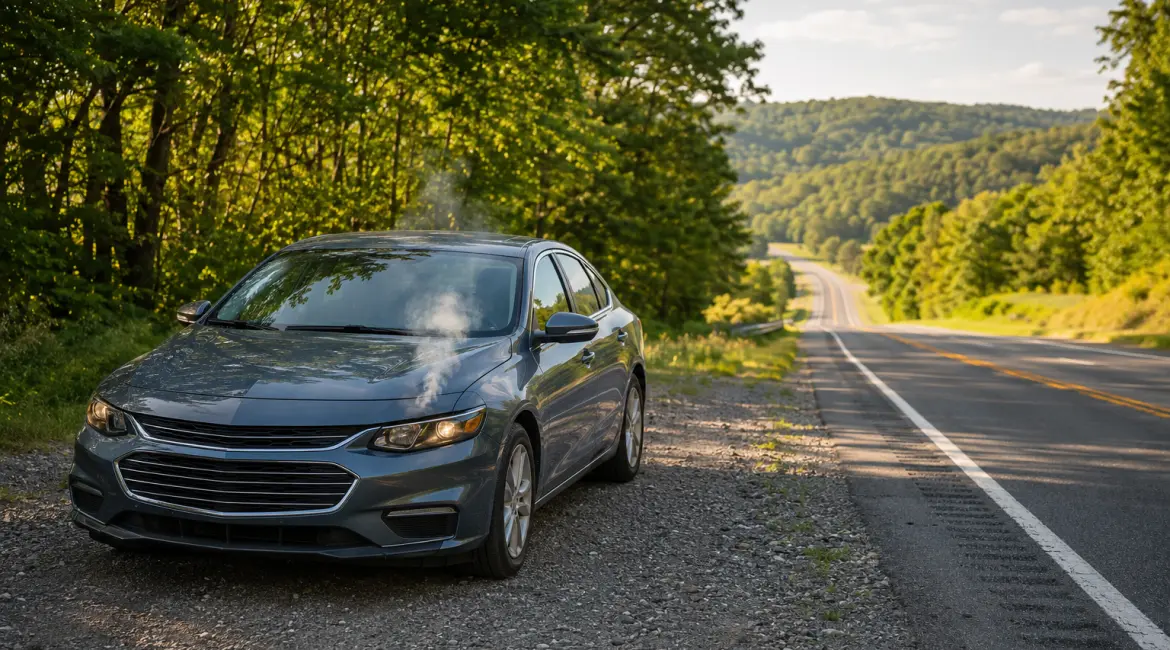
Look for a change in oil level, wisps of smoke after parking, or oil residue around the engine. Do not reach near hot exhaust components. If oil is dripping onto the exhaust, smoke is increasing, or the oil-pressure warning appears, shut the vehicle down safely.
2. A Sweet Smell From the Car
A sweet odor often suggests engine coolant. Possible sources include a radiator, hose, thermostat housing, water pump, coolant reservoir, heater core, or connection that leaks only after the system becomes hot and pressurized.
Coolant can evaporate without leaving a clear puddle. A heater core leak may also cause windshield film, damp carpeting, or changing heater performance. Never open a hot cooling system. If the gauge climbs, steam appears, or heater output suddenly turns cold while the engine is hot, stop safely.
3. A Burning Rubber Smell
A car that smells like burning rubber may have a slipping serpentine belt, a pulley that is beginning to seize, a hose touching a hot component, or a tire rubbing because of damage or a displaced liner.
Squealing, visible belt damage, charging problems, a rising engine temperature, or steering changes may accompany belt slip. Do not place hands near a moving belt or pulley because a damaged belt can fail without much warning.
4. A Burning Plastic or Electrical Smell
Hot insulation has a sharp chemical odor that is often different from oil or rubber. Electrical heat can come from a loose terminal, high-resistance connector, damaged wiring harness, blower motor, blower motor resistor, fuse box, relay, alternator, battery terminal, or an electrical short.
The problem may occur only when a high-current device such as the blower motor, rear defroster, cooling fan, or charging system is operating. Electrical heat can worsen quickly. If smoke is active, the odor is severe, or electrical functions begin failing, stop safely and arrange a tow.
5. A Burning Carpet or Fabric Smell
Drivers often describe overheated brakes as smelling like burnt carpet or fabric. A sticking brake caliper, restricted flexible brake hose, partially applied parking brake, overheated pads, or mechanical parking-brake problem can keep a brake applied after the pedal is released.
Long downhill grades on rural or mountain roads can overheat otherwise functional brakes when a driver rides the pedal continuously. When the vehicle manufacturer permits, using an appropriate lower gear can help control speed. However, cooling the brakes does not prove the problem is resolved. Pulling, smoke, brake fade, a changed pedal, or heat concentrated at one wheel requires inspection before normal driving resumes.
A light odor may occur while newly installed brake pads complete their initial bedding process. It should fade rather than return at one wheel. Repeated smoke, pulling, brake fade, or a change in pedal feel after brake service is not normal and warrants a recheck.
6. A Rotten-Egg or Sulfur Smell
A sulfur odor may come from the exhaust when the engine runs rich, combustion is incomplete, or sulfur compounds accumulate in the catalytic converter. Engine performance problems, warning lights, misfires, or fuel-control faults may accompany it.
The battery and charging system are another important possibility. A failing or overcharged battery can vent sulfur-smelling gas, especially if charging voltage is incorrect or the battery is hot. Odor location changes the diagnostic direction. Strong sulfur near the battery calls for charging-system and battery testing, not an automatic catalytic converter replacement.
If the battery is swollen, hot, hissing, or leaking, do not touch it or continue driving. Shut the vehicle off in a safe location, keep sparks and flames away, and arrange professional help.
7. A Hot-Metal Smell
Hot metal can come from overheated brakes, a wheel bearing as damage progresses, exhaust components operating at excessive temperature, or metal-to-metal contact. The smell is more useful when paired with grinding, humming, vibration, looseness, smoke, or a measured temperature difference.
A hot-metal smell alone does not confirm wheel-bearing failure. Persistent grinding, steering changes, brake fade, or an excessively hot wheel calls for a safe stop and professional evaluation.
Could the Smell Be Coming From Somewhere Other Than the Engine?
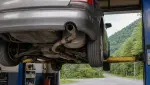
Yes. A hot odor near one wheel may come from a dragging brake, wheel bearing, rubbing tire, or displaced liner. Beneath the vehicle, the source could be the clutch, transmission fluid, exhaust system, or debris trapped against a hot pipe.
Inside the cabin, a heater core, blower motor, resistor, connector, or damaged wire may be involved. Underhood fumes can also be drawn through the HVAC intake and mistaken for a dashboard problem. The area where the odor is strongest helps set the test plan, but it does not prove which part failed.
Burning Smell or Normal? Situations That Are Not Always a Problem
Certain odors can occur temporarily after new brakes or exhaust parts are installed, protective coatings heat for the first time, a small amount of oil is spilled during service, or a clutch is briefly overheated during a difficult maneuver. Road debris on a hot exhaust component can also create a short-lived smell. A faint odor that occurs once after service is different from one that returns every time the engine warms up or the brakes are used.
Recent work does not automatically make an odor normal. A harmless temporary smell should generally become weaker and disappear. It should not:
- Grow stronger
- Return on every trip
- Produce heavy smoke
- Appear with warning lights
- Change braking, steering, shifting, or engine performance
- Continue for an extended period
If the odor persists or worsens, contact the shop that performed the work and request a recheck. Explaining when it appears helps the technician reproduce it.
Should You Keep Driving If You Notice a Burning Smell?
Sometimes a vehicle can be scheduled for an inspection without an emergency tow. Other combinations of symptoms make stopping the safer choice.
Stop Safely and Seek Help When You Notice
- Smoke from under the hood, beneath the vehicle, or near a wheel
- A strong electrical burning odor
- Brake fade, pulling, steering changes, or a different brake-pedal feel
- A wheel that appears excessively hot
- Fluid dripping onto hot exhaust components
- A rapidly rising temperature gauge
- Sudden loss of power
- Strong fumes entering the passenger compartment
- An odor that returns strongly after a brief stop
Do not touch a wheel, brake rotor, battery, wiring, or leaking fluid to determine whether it is hot. A visual observation from a safe distance is more useful than risking a burn or electrical injury.
Do not spray water onto an overheated wheel or brake assembly. Allow the components to cool naturally from a safe distance. Rapid temperature change can damage hot brake parts, and the underlying caliper, hose, parking-brake, or bearing problem will still need to be inspected.
If Flames or Rapidly Increasing Smoke Appear
Move to a safe location if the vehicle can be moved without putting occupants in greater danger. Shut off the engine only if it can be done safely, have everyone exit, move a safe distance away, and contact emergency services.
Do not open the hood when an engine-compartment fire is suspected. Opening it may supply more oxygen and intensify the fire. Untrained occupants should not attempt to fight a vehicle fire.
If Smoke or Strong Fumes Enter the Cabin
Open the windows if it is safe, pull over, and exit if exposure continues. Do not keep driving while breathing strong fumes. Anyone who develops dizziness, headache, nausea, breathing difficulty, confusion, or unusual fatigue should move to fresh air and seek appropriate medical assistance. Odor alone cannot identify the exposure.
Vehicle Smell Comparison Guide
| Smell | Possible Cause | Recommended Action |
|---|---|---|
| Burning oil | External oil leak or service spill | Schedule an inspection soon |
| Sweet odor | Coolant or heater core leak | Inspect promptly and watch temperature |
| Burning rubber | Belt, hose, tire, or clutch | Diagnose as soon as possible |
| Burning plastic | Electrical component or wiring | Stop driving if severe or accompanied by smoke |
| Rotten eggs | Fuel-control, exhaust, battery, or charging issue | Schedule diagnostics |
| Burning brakes | Brake overheating or dragging component | Stop safely and allow cooling before inspection |
| Hot metal | Bearing, brakes, exhaust, or metal contact | Professional inspection recommended |
This guide helps establish urgency, not the exact repair. Odor, timing, location, temperature, visible evidence, and operating conditions still have to be considered together.
Common Burning-Smell Misdiagnoses
People naturally connect an odor with the most familiar explanation. A sulfur smell often gets blamed on the catalytic converter, yet the source may be a rich fuel mixture, misfire, failing battery, or charging fault. Where the odor is strongest, along with scan data and charging voltage, matters more than the label.
The same judgment applies at a hot wheel. A dragging brake may create more friction heat than a damaged wheel bearing, so the technician compares temperatures and checks brake release, bearing noise, looseness, and vibration before selecting a repair. Sweet coolant odor and burning oil can also sound expensive without being catastrophic. A hose, clamp, gasket, or filter seal may be responsible even when the engine otherwise runs normally.
Warning lights help, but many leaks, brake problems, bearings, belts, and overheated connectors are not directly monitored. A clear dashboard does not rule out a developing problem.
Real Burning-Smell Problems We Commonly Diagnose in Madison Heights
These examples reflect common diagnostic patterns and are not presented as specific customer histories.
The Odor Appears Only After Parking
A higher-mileage vehicle completes a Route 29 commute without smoke or warning lights. Several minutes after parking, a burning-oil smell develops near the front of the vehicle. Inspection finds oil residue near a hot exhaust surface. Heat soak made the odor easier to notice after airflow stopped.
One Wheel Smells Hot After Lynchburg Traffic
A vehicle begins pulling slightly and develops a strong odor near one front wheel during stop-and-go driving. Temperature comparison shows that wheel is much hotter than the opposite side. The technician then determines whether the cause is a sticking caliper, restricted brake hose, parking-brake issue, or wheel-end problem rather than choosing a part from odor alone.
Sulfur Is Strongest Under the Hood
A driver expects a catalytic converter problem, but the odor is strongest around the battery rather than the tailpipe. Charging-system testing, battery temperature, terminal condition, and voltage become the immediate priorities.
A Plastic Smell Appears Only With the Blower
The cabin smells like hot plastic when the fan is on high. Inspection focuses on the blower motor, resistor, connector, wiring, cabin air filter, and debris inside the HVAC housing. Reproducing the odor under the same operating condition is more useful than a general visual check.
How Chrome Auto Repair Diagnoses Burning Smells Correctly
An odor diagnosis begins with listening. The technician asks when the smell starts, how long it lasts, where it is strongest, whether smoke appears, and which vehicle functions are operating. Recent repairs, long downhill driving, towing, or an odor that appears only after parking can change the inspection path.
The next steps depend on the evidence:
- Reproduce the condition when it is safe and practical.
- Inspect for leaking fluids, damaged belts, road debris, heat marks, and melted material.
- Focus on the system suggested by the location, such as brakes at one wheel, wiring near the battery, or HVAC components behind the dash.
- Use temperature comparison, pressure testing, scan data, charging tests, or electrical measurements as needed.
- Explain what was found, provide an estimate, and obtain approval before repairs begin.
- Verify the repair under the conditions that originally produced the odor.
The cost and time required depend on the failed component, access, severity, vehicle design, related damage, and how consistently the odor can be reproduced. Some problems are visible immediately. Others require heat, electrical measurements, temperature comparison, leak detection, road testing, or limited disassembly.
Chrome Auto Repair recommends the work supported by the test results. That may be a gasket, hose, brake component, wiring repair, battery, belt, or exhaust repair. It is not automatically the most expensive possibility associated with the smell.
Preventive Maintenance That Can Reduce the Risk of Burning Smells
No maintenance plan prevents every failure, but routine checks can reveal conditions that create heat and odor.
- Follow the vehicle manufacturer’s fluid and maintenance schedule.
- Investigate oil or coolant loss instead of repeatedly topping off.
- Inspect the serpentine belt, tensioner, pulleys, hoses, and wiring during service.
- Address brake pulling, noise, vibration, or changing pedal feel promptly.
- Release the parking brake fully and confirm dashboard indicators turn off.
- Avoid riding the brakes on long descents. Use an appropriate lower gear when conditions and the manufacturer permit.
- Have the battery and charging system tested when starts become slow, lights fluctuate, or sulfur odor appears.
- Keep leaves, nesting material, and road debris away from hot exhaust and HVAC areas.
- Report intermittent odors before they become constant.
Age alone does not identify what will fail. Maintenance history, vehicle design, operating conditions, and the specific symptoms matter more.
Common Myths About Burning Smells
Myth: “If There Are No Warning Lights, It Is Safe to Ignore.”
Many oil leaks, brake problems, wheel bearings, belts, and electrical connections are not directly monitored. A dashboard without warning lights does not establish that the vehicle is safe.
Myth: “A Burning Smell Always Means a Major Repair.”
Many odors begin with a small gasket leak, debris on the exhaust, a loose connection, or a belt problem. Early testing may keep a manageable repair from affecting additional components.
Myth: “If the Smell Goes Away, the Problem Is Fixed.”
Temperature, airflow, traffic, braking, and engine load can make an intermittent problem disappear temporarily. Record the conditions and schedule an inspection if it returns.
Why Madison Heights Drivers Choose Chrome Auto Repair
Chrome Auto Repair’s technicians do not choose a repair from the driver’s description alone. They work to reproduce the odor, identify the system producing it, and explain the evidence before repairs begin. That approach is supported by more than 25 years of automotive experience, ASE-certified technicians, BBB Accreditation, and an O’Reilly-backed 3-Year/36,000-Mile Warranty on qualifying repairs.
Complimentary shuttle or Uber assistance can help customers stay on schedule, and free coffee is available for those who wait at the family-owned Madison Heights shop.
Many burning smells begin with repairable problems such as a leaking gasket, slipping belt, damaged connector, or sticking caliper. The reason to investigate early is not to assume the worst. It is to keep a limited problem from damaging nearby parts.
Frequently Asked Questions
What causes a burning smell while driving?
A burning smell while driving can come from oil or coolant reaching a hot surface, an overheated brake, a slipping belt, an electrical connection, exhaust heat, clutch friction, transmission fluid, or road debris. The most useful clues are when the smell appears, where it is strongest, and whether smoke, warning lights, noise, pulling, or performance changes occur.
Is it safe to drive with a burning smell?
It depends on the accompanying symptoms. A faint, one-time post-service odor may only require a call to the shop, but smoke, a strong electrical odor, a rising temperature gauge, brake fade, pulling, a hot wheel, or fluid reaching the exhaust calls for a safe stop. If you cannot determine whether the vehicle is safe, arrange a tow.
Why does my car smell like burning oil?
Oil may be escaping from a gasket, seal, filter area, or another connection and reaching a hot exhaust surface. A small leak can burn away without leaving a puddle, so the odor may be strongest after parking. Check the oil level only according to the vehicle manufacturer’s instructions and have a recurring smell inspected.
Can bad brakes cause a burning smell?
Yes. A sticking caliper, restricted brake hose, partially applied parking brake, or overheated friction material can create a strong hot-carpet odor. Heat at one wheel, smoke, pulling, brake fade, or a changed pedal makes continued driving risky. Let the assembly cool naturally and do not spray it with water.
What does an electrical burning smell mean?
It may mean a connector, wire, blower motor, resistor, relay, fuse-box component, alternator, or battery connection is overheating. Electrical heat can worsen quickly, particularly when insulation or plastic begins melting. Do not touch damaged wiring or a hot battery. Stop safely and arrange prompt inspection if the odor is strong, smoke appears, or electrical functions begin failing.
Why does the smell only happen after highway driving?
Highway driving creates sustained engine load, exhaust temperature, airflow, and wheel speed. Those conditions can expose a small oil leak, overheated brake, belt problem, exhaust concern, or wheel-end issue that is not obvious during short trips. Note how long you drove, whether you braked heavily, and whether the smell appeared while moving or only after parking.
How much does it cost to diagnose a burning smell?
The cost depends on how reproducible the odor is, what system is involved, component access, vehicle design, and whether diagnosis requires road testing, electrical measurements, temperature comparisons, leak detection, or disassembly. A visible oil leak and an intermittent electrical odor require different amounts of testing. An inspection and estimate based on the actual symptoms are more useful than a broad price range.
When should a vehicle with a burning smell be towed?
Towing is safer when the odor appears with active smoke, severe electrical burning, brake fade, an excessively hot wheel, abnormal steering, a rising temperature gauge, fluid reaching hot exhaust parts, significant power loss, visible fire damage, or a strong odor that returns after a brief stop. If safety is uncertain, avoid driving the vehicle to the shop.
Schedule an Inspection Before a Strange Smell Becomes a Bigger Repair
If your vehicle develops a burning oil, rubber, plastic, brake, coolant, sulfur, clutch, or transmission odor, note when it happens and where it seems strongest. Chrome Auto Repair can inspect the affected systems, explain the evidence, and recommend the repair supported by the diagnosis.
- Phone: (434) 219-6443
- Address: 4998 S Amherst Hwy, Madison Heights, VA 24572
- Facebook: Follow us on Facebook
Call to schedule diagnostics, request directions, or ask whether the symptoms make towing the safer choice.