
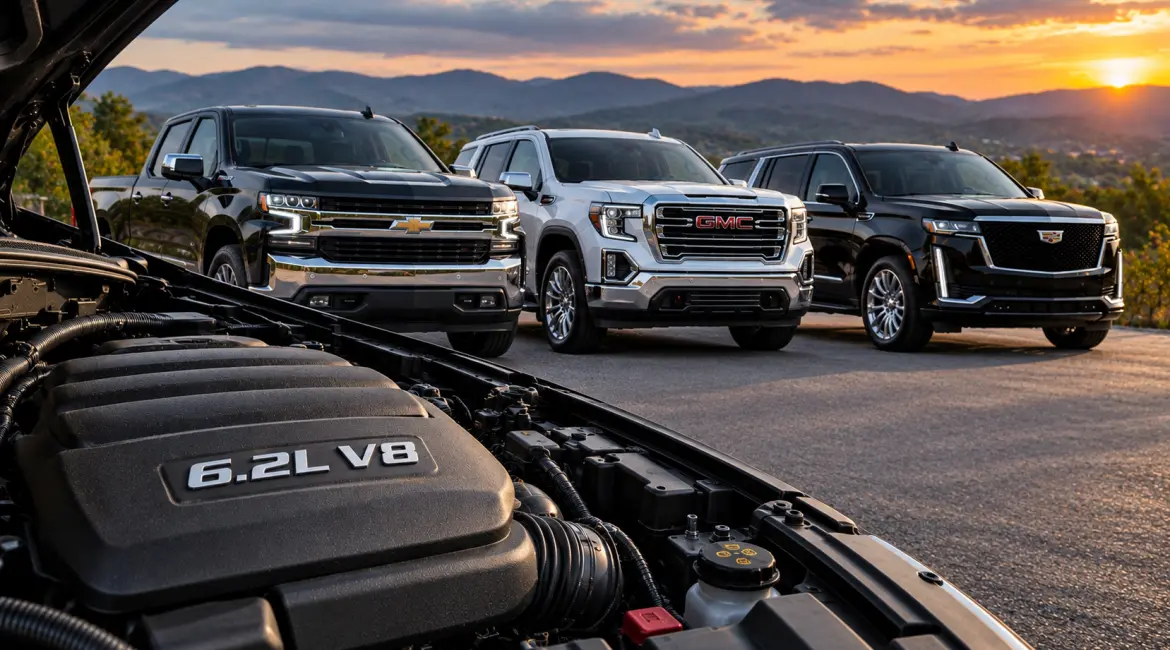
At Chrome Auto Repair in Madison Heights, VA, engine problems are approached as diagnostic problems—not guesses. Chrome Auto Repair is a family-owned independent shop established in 2020, with more than 25 years of automotive experience and documented engine diagnostics and repair capabilities. For owners of a 2021–2024 Chevrolet Silverado 1500, Tahoe, Suburban, GMC Sierra 1500, Yukon, Yukon XL, or Cadillac Escalade equipped with the 6.2L V8 L87, the GM engine recall raises an understandable question: What does the recall actually mean, and what should you do if your engine starts showing symptoms?
The answer is more involved than simply “take it to the dealer.” The original recall covers a defined group of vehicles and a specific internal-engine concern, while NHTSA has continued examining reports of L87 engine failures after recall remedies were completed.
Quick Answer: What Should You Do If Your GM 6.2L L87 Engine Is Recalled?
If your vehicle is affected by GM’s 6.2L L87 recall, the first step is to determine the vehicle’s individual recall status and follow the manufacturer’s current recall instructions. NHTSA’s recall system lets owners search by VIN or license plate to see whether a specific vehicle has an unrepaired safety recall.
A recall does not mean every L87 engine will fail, and an engine that passes the recall inspection is not a guarantee that the engine can never develop another problem. NHTSA later opened an investigation into reported engine failures after the recall remedy, so recall history is important—but it still is not a substitute for diagnosing the vehicle’s actual symptoms.
What Is the 2021–2024 GM 6.2L L87 Engine Recall?
NHTSA Recall 25V-274 covers certain 2021–2024 Cadillac Escalade and Escalade ESV, Chevrolet Silverado 1500, Suburban and Tahoe, and GMC Sierra 1500, Yukon and Yukon XL vehicles equipped with GM’s 6.2L V8 gasoline engine, identified by the RPO code L87. The original recall population was tied to vehicles produced from March 1, 2021, through May 31, 2024.
The issue involves internal engine components. GM’s recall report says the connecting rod and/or crankshaft components may have manufacturing defects that can lead to engine damage and engine failure. If the engine fails while the vehicle is being driven, the vehicle can lose propulsion, increasing the risk of a crash.
NHTSA Recall 25V-274 covers certain 2021–2024 Cadillac Escalade and Escalade ESV, Chevrolet Silverado 1500, Suburban and Tahoe, and GMC Sierra 1500, Yukon and Yukon XL vehicles equipped with the 6.2L V8 L87.
That is why this is a safety recall rather than ordinary maintenance. It does not mean every 6.2L V8 is defective, and it does not mean every 2021–2024 GM truck or SUV is automatically included. The actual vehicle configuration and VIN determine whether the vehicle is part of the recalled population.
Which Silverado, Sierra, Tahoe, Yukon, Suburban, and Escalade Models Are Affected by the L87 Recall?
The original recall covers these vehicle families when they are equipped with the applicable 6.2L L87 engine and fall within the recalled population:
| Vehicle | Model years in original recall | Engine |
| Chevrolet Silverado 1500 | 2021–2024 | 6.2L V8 L87 |
| Chevrolet Tahoe | 2021–2024 | 6.2L V8 L87 |
| Chevrolet Suburban | 2021–2024 | 6.2L V8 L87 |
| GMC Sierra 1500 | 2021–2024 | 6.2L V8 L87 |
| GMC Yukon | 2021–2024 | 6.2L V8 L87 |
| GMC Yukon XL | 2021–2024 | 6.2L V8 L87 |
| Cadillac Escalade | 2021–2024 | 6.2L V8 L87 |
| Cadillac Escalade ESV | 2021–2024 | 6.2L V8 L87 |
The important part is the combination of vehicle, model year, engine, and VIN. A 2022 Tahoe, 2023 Silverado 1500, or 2024 Escalade does not automatically fall into the original recall simply because it has a 6.2L engine.
NHTSA’s recall system can be used to check the individual vehicle rather than relying on the model year alone.
What Is Causing the GM 6.2L L87 Engine Failures?
The easiest way to understand the recall is to follow the problem inside the engine. The connecting rods transfer combustion force from the pistons to the crankshaft, which converts that reciprocating motion into rotation. Rod bearings operate between the connecting rods and crankshaft journals and depend on precise clearances and a stable oil film for lubrication.
When those components are damaged or produced outside the required specifications, the rotating assembly can deteriorate. GM’s recall investigation identified concerns involving sediment affecting connecting-rod and crankshaft oil galleries, along with crankshaft dimensional and surface-finish issues.
Those conditions can lead to bearing damage and, ultimately, severe engine damage or failure. The safety concern comes from what happens if the engine stops producing normal propulsion while the vehicle is being driven.
GM reported 597,571 potentially involved U.S. vehicles in the original recall population. Its recall chronology also reported tens of thousands of potentially related complaints and incidents through early 2025, including reports alleging loss of propulsion. Complaint counts are field reports, not proof that every report represented a confirmed recall-related failure.
From a mechanic’s standpoint, the distinction is critical: the recall identifies a documented population and a specific failure risk. It does not diagnose an individual engine.
What Symptoms Can a Failing 6.2L L87 Engine Produce Before It Fails?
GM’s recall information identifies several possible warning signs, including:
- Knocking, banging, or other unusual engine noises
- Check-engine-light illumination
- Hesitation
- Changes in engine performance
- Abnormally high engine RPM
- Abnormal shifting
- Reduced propulsion
- A no-start condition
Those symptoms should not be treated as a guaranteed sequence. One owner may hear a new mechanical noise. Another may see a warning light. Another may notice a performance change. A severe mechanical failure may also develop without giving the driver a long, predictable warning period.
A new engine tick or knock deserves attention
A new mechanical noise is different from a sound the vehicle has always made. A technician needs to determine where the sound originates, whether it follows engine speed, whether it changes as the engine warms up, and whether other symptoms occur at the same time.
Not every tick or knock is an L87 recall failure. Valvetrain components, accessories, exhaust-related noises, combustion problems, and other mechanical faults can create noises that an owner may describe as a tick or knock.
Oil-related warnings should not be ignored
Because the recall involves internal engine components and lubrication-related conditions, an oil-pressure warning or major change in engine behavior deserves serious attention. Low oil level and an internal engine failure are not the same thing, so the actual condition still has to be diagnosed.
Sudden loss of power is a safety concern
The recall matters in part because an engine failure can result in loss of propulsion. That is the safety issue owners should keep in mind when deciding how quickly to address major symptoms.
Is It Safe to Drive a GM 6.2L L87 Engine With an Open Recall?
There is not one blanket yes-or-no answer for every recalled vehicle. Start with the individual vehicle’s recall status and the manufacturer’s instructions.
NHTSA advises owners to follow the manufacturer’s recall instructions and any interim safety guidance that applies to the vehicle. If the engine is operating normally and the owner has an open recall, that is different from a vehicle that has developed severe engine symptoms.
If a recalled vehicle suddenly develops a serious knock, significant loss of power, an oil-pressure warning, or another major engine problem, the situation should be treated as an active vehicle condition rather than simply a routine recall appointment.
The practical distinction is simple: **recall status tells you that a vehicle belongs to a safety campaign; current symptoms tell you what the vehicle is doing right now.**
What Does the L87 Recall Repair Actually Do?
The recall remedy is not simply “replace every 6.2L engine.” GM’s documented process includes an engine inspection. Depending on the inspection result, a vehicle may receive the specified engine repair or replacement. Vehicles that pass the inspection receive a higher-viscosity oil service that includes the specified oil, filter, oil-fill cap, and related owner’s-manual information.
That means two vehicles with the same L87 engine can receive different recall remedies. One may require an engine replacement, while another may pass the inspection and receive the prescribed oil-service remedy.
The recall remedy is handled through GM’s authorized recall process. An independent repair shop should not be presented as a substitute for the manufacturer’s free recall remedy.
An independent shop can still have an important role when a vehicle develops an engine symptom, has a post-recall concern, needs unrelated maintenance or repair, or requires diagnosis outside the scope of the manufacturer recall.
What Should You Do If Your L87 Engine Fails After the Recall Repair?
This is where the story changed significantly in 2026. On January 16, 2026, NHTSA opened Recall Query RQ26001 after receiving owner complaints alleging engine failures in vehicles that had already received the Recall 25V-274 remedy. The complaints involved vehicles that had received both major remedy paths: higher-viscosity oil service and engine replacement.
NHTSA’s opening document said the agency was evaluating the adequacy of the recall remedy. In August 2026, NHTSA opened Engineering Analysis EA26005 to continue investigating post-remedy engine failures and expanded the investigation to include reported failures involving L87 engines outside the original recall production period.
The agency is examining reports of post-remedy L87 engine failures as part of its ongoing investigation.
That development is important, but it needs to be described carefully. An open Engineering Analysis is an ongoing investigation; it is not a final conclusion that every recall remedy failed or that every L87 engine is defective.
If an engine fails after recall work, keep the recall paperwork, repair order, mileage, details of the work performed, diagnostic results, and any subsequent repair records. A clean timeline can make it much easier for a technician or manufacturer to understand what happened.
What Warning Signs Mean You Should Stop Treating the L87 Problem Like Routine Maintenance?
An open recall with no symptoms is one situation. A vehicle with new or worsening engine symptoms is another.
Open recall, no symptoms
Determine the vehicle-specific recall status and follow the manufacturer’s instructions for completing the recall.
New engine noise
A new knock, bang, or other unusual mechanical noise deserves diagnosis. A vehicle can continue to drive even when an engine problem is developing, so continued drivability does not make a new noise harmless.
Oil-pressure warning or serious oil concern
Treat an oil-pressure warning as a serious engine symptom, especially if it occurs with abnormal noise, rough running, or reduced performance.
Major loss of power or severe drivability problems
Do not continue driving simply to see if the problem gets worse. Loss of propulsion is one of the safety concerns associated with severe engine failure.
Post-recall symptoms
Keep the recall documentation and have the current condition evaluated. Do not automatically assume that a later symptom is either definitely covered by the recall or definitely unrelated.
What Can a GM 6.2L L87 Owner Check Before Taking the Vehicle to a Shop?
There is plenty an owner can document without taking the engine apart.
- VIN and recall status
- Current mileage
- Date the recall remedy was performed
- What the repair order says was done
- Whether the engine was replaced
- Warning lights or messages
- New engine noises
- Changes in power or drivability
- Whether the problem appears cold, warm, at idle, or under load
If the engine is making a noise, pay attention to when it occurs. Does it start immediately on a cold start? Does it change as the engine warms? Does it follow engine speed? Does the vehicle hesitate or lose power at the same time?
That information can be much more useful than simply telling a technician, “The engine sounds bad.”
If a warning message appears, photograph it when it is safe to do so. Avoid repeatedly clearing trouble codes before an inspection, and don’t keep driving a vehicle with severe engine symptoms just to reproduce the problem.
How a Technician Diagnoses an L87 Engine Problem Without Assuming Every Failure Is the Recall
A professional engine diagnosis should follow a logical sequence: **Symptom → History → Test → Finding → Diagnosis → Appropriate repair path**.
Step 1: Establish the vehicle and engine history
The technician confirms the VIN, model, model year, engine configuration, mileage, recall history, and previous engine work.
Step 2: Document the exact complaint
The technician needs to know whether the complaint involves ticking, knocking, hesitation, rough running, loss of power, a warning light, an oil-pressure concern, a no-start condition, or another change in performance.
Step 3: Scan the vehicle
A diagnostic scan can identify stored and pending faults and provide additional information about what the control system has detected. But scanning alone does not prove an internal engine failure.
Step 4: Evaluate the engine’s operating condition
Depending on the complaint, the technician may evaluate oil condition, lubrication-related symptoms, noise characteristics, engine performance, and other relevant mechanical evidence.
Step 5: Reproduce the symptom
If an owner says the noise appears only after the engine warms up, the technician wants to hear the condition under those circumstances. If the problem happens under load, that matters too. The goal is to determine what the engine is actually doing when the symptom occurs.
Step 6: Consider the differential diagnosis
Not every tick or knock points to the recalled L87 condition. The sound could come from valvetrain components, accessories, an exhaust leak, a combustion issue, a lubrication problem, or another mechanical fault. The source has to be identified before the noise can be tied to the recall.
Step 7: Compare the findings with the appropriate current information
The original recall addresses a defined population. The newer NHTSA investigation adds another layer because the agency is examining reported post-remedy failures and has expanded its scope beyond the original production period.
The technician’s job is to determine what is actually happening on the vehicle and then relate those findings to the appropriate manufacturer and regulatory information.
Chrome Auto Repair’s documented engine diagnostics and repair capabilities make professional evaluation appropriate for symptoms and conditions outside the manufacturer’s recall remedy.
A Realistic L87 Diagnostic Example: Why Recall History Is Only One Piece of the Puzzle
Consider a 2022 Silverado 1500 with the L87 engine that already received the recall remedy. Several months later, the owner notices a metallic noise during the first minute after startup. The truck still drives normally, so the owner assumes the recall must have failed.
That is an understandable concern, but it still is not a diagnosis. A technician would review the recall paperwork, mileage, maintenance history, warning-light history, and the exact conditions under which the noise appears. The engine would then be evaluated to determine where the sound originates and whether other symptoms or diagnostic information are present.
The symptom may be related to the recalled condition, or it may come from another mechanical problem entirely. Recall history changes the diagnostic context, but it does not eliminate the need to diagnose the vehicle in front of you.
**The recall tells you what GM and NHTSA are concerned about. The diagnosis tells you what is actually happening on your engine.**
Can an Independent Auto Repair Shop Fix an L87 Recall Problem?
There is an important distinction between recall repair and vehicle diagnosis.
An open manufacturer safety recall is handled through the manufacturer’s authorized recall process. NHTSA tells owners with open recalls to contact the manufacturer’s dealership for the free recall repair.
An independent shop can still provide valuable service when a vehicle has an engine noise, warning light, drivability complaint, post-recall engine concern, unrelated engine problem, or maintenance and repair needs outside the recall remedy.
For example, if a Tahoe already received recall work and later develops a new mechanical noise, the correct response is not to assume the noise is automatically covered by the recall. The vehicle needs to be diagnosed.
Chrome Auto Repair’s documented engine diagnostics and repair capabilities make that type of independent evaluation a natural fit when appropriate.
Expert Tip: Keep Every Record From the L87 Recall Repair
Keep the recall paperwork, repair order, mileage, description of the work performed, engine replacement information if applicable, and any diagnostic records from later visits.
That paperwork becomes especially useful if the vehicle develops an engine problem months or years later. A simple timeline can answer important questions about when the recall work occurred, what was done, and how much the vehicle had been driven afterward.
GM 6.2L L87 Recall FAQ: What Silverado, Sierra, Tahoe, Yukon, and Escalade Owners Need to Know
What GM vehicles are affected by the 6.2L L87 recall?
Recall 25V-274 covers certain 2021–2024 Cadillac Escalade and Escalade ESV, Chevrolet Silverado 1500, Suburban and Tahoe, and GMC Sierra 1500, Yukon and Yukon XL vehicles equipped with the 6.2L V8 L87.
What years of the L87 engine are included in the original recall?
The original recall covers L87-equipped vehicles produced from March 1, 2021, through May 31, 2024, within the affected vehicle population.
Is every GM 6.2L engine recalled?
No. The original recall is tied to specific vehicle configurations and production information. VIN-specific recall status is the proper way to determine whether an individual vehicle has an open recall.
What happens if my L87 engine passes the recall inspection?
The documented remedy provides the prescribed higher-viscosity oil service, including the specified oil filter and oil-fill-cap changes, for vehicles that pass the inspection.
Does GM replace every recalled 6.2L engine?
No. The remedy is based on the inspection results. Some vehicles receive the specified oil-service remedy, while vehicles that do not pass the inspection can receive the required engine repair or replacement.
Can I drive my vehicle while waiting for the recall?
Follow the manufacturer’s current instructions for the individual vehicle. If the engine develops severe symptoms such as significant knocking, loss of power, or an oil-pressure warning, treat that as an active engine problem rather than routine recall scheduling.
What if my L87 engine fails after the recall repair?
Keep the recall paperwork, document the failure and mileage, and have the current problem diagnosed. NHTSA opened Recall Query RQ26001 after receiving complaints alleging post-remedy engine failures and later opened Engineering Analysis EA26005.
Can an independent shop perform the L87 recall repair?
The manufacturer recall remedy is handled through the authorized recall process. An independent shop can diagnose engine symptoms, investigate post-recall concerns, and perform appropriate repairs outside the manufacturer’s recall remedy.
What symptoms can indicate serious L87 engine trouble?
GM identifies knocking, banging or unusual engine noises, check-engine-light illumination, hesitation, abnormal shifting, reduced propulsion, and no-start conditions among possible warnings. Those symptoms do not prove the recall-related defect, but they should not be ignored.
What does recall 25V-274 mean?
25V-274 is the NHTSA safety-recall number assigned to the GM L87 engine recall. GM identifies its manufacturer campaign as N252494000.
What is NHTSA investigating now with the L87 engine?
NHTSA opened Recall Query RQ26001 in January 2026 to assess the adequacy of the Recall 25V-274 remedy after post-remedy engine-failure complaints. In August 2026, the agency opened Engineering Analysis EA26005 to continue investigating those reports and expanded the scope to include reported failures outside the original recall production period.
What Should You Do Next If Your GM 6.2L L87 Engine Is Affected?
Start with the individual vehicle, not the headline you saw online.
Check the VIN and determine whether the vehicle has an open recall. Follow the manufacturer recall instructions for an open campaign.
If the engine has symptoms, document the mileage, noises, warning lights, performance changes, and when the condition occurs.
Keep the recall paperwork and any later repair records together.
If the vehicle develops severe engine symptoms, don’t keep driving simply to see what happens.
If the recall has already been completed and the engine develops a new concern, don’t assume the problem is automatically covered or automatically unrelated. Have the current condition properly diagnosed.
GM 6.2L L87 Engine Recall Help in Madison Heights, VA: Get the Problem Properly Diagnosed
If your Chevrolet Silverado 1500, Tahoe, Suburban, GMC Sierra 1500, Yukon, Yukon XL, or Cadillac Escalade has the L87 engine and you’re dealing with an engine noise, warning light, rough running, loss of performance, or a concern after recall work, the first step is to determine what the vehicle is actually doing.
Chrome Auto Repair is a family-owned independent shop. The shop serves Madison Heights and surrounding Central Virginia communities.
An open GM safety recall should be handled through the manufacturer’s authorized recall process. When a vehicle has a symptom that needs diagnosis, a post-recall concern, or an unrelated engine problem, accurate independent diagnosis can help determine what is actually happening.
You can visit 4998 S Amherst Hwy, Madison Heights, VA 24572 or call (434) 219-6443 to discuss your vehicle’s symptoms and arrange appropriate diagnostic service.
Connect with Chrome Auto Repair on Facebook for additional shop information.

[…] related issues on GM trucks, see our post on the 2021-2024 GM 6.2L L87 engine recall. If you notice a coolant smell alongside the oil issue, our coolant leak repair guide covers the […]